Every photograph the house owns, in one place — numbered, captioned, and openable at a touch. House photographs are real and untouched; anything generated sits in the last chapter and says so.
I
The street, the hall and the stair
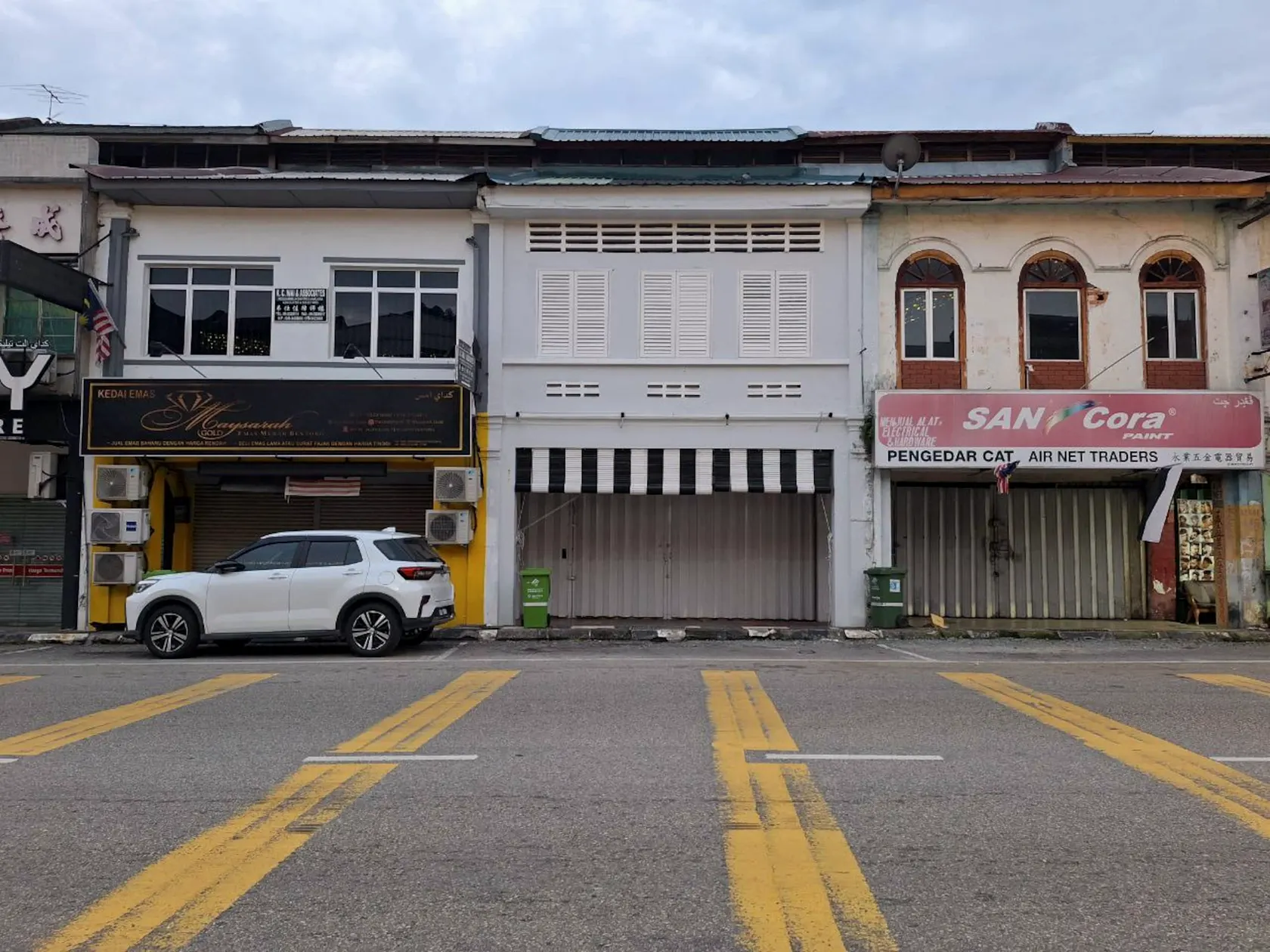
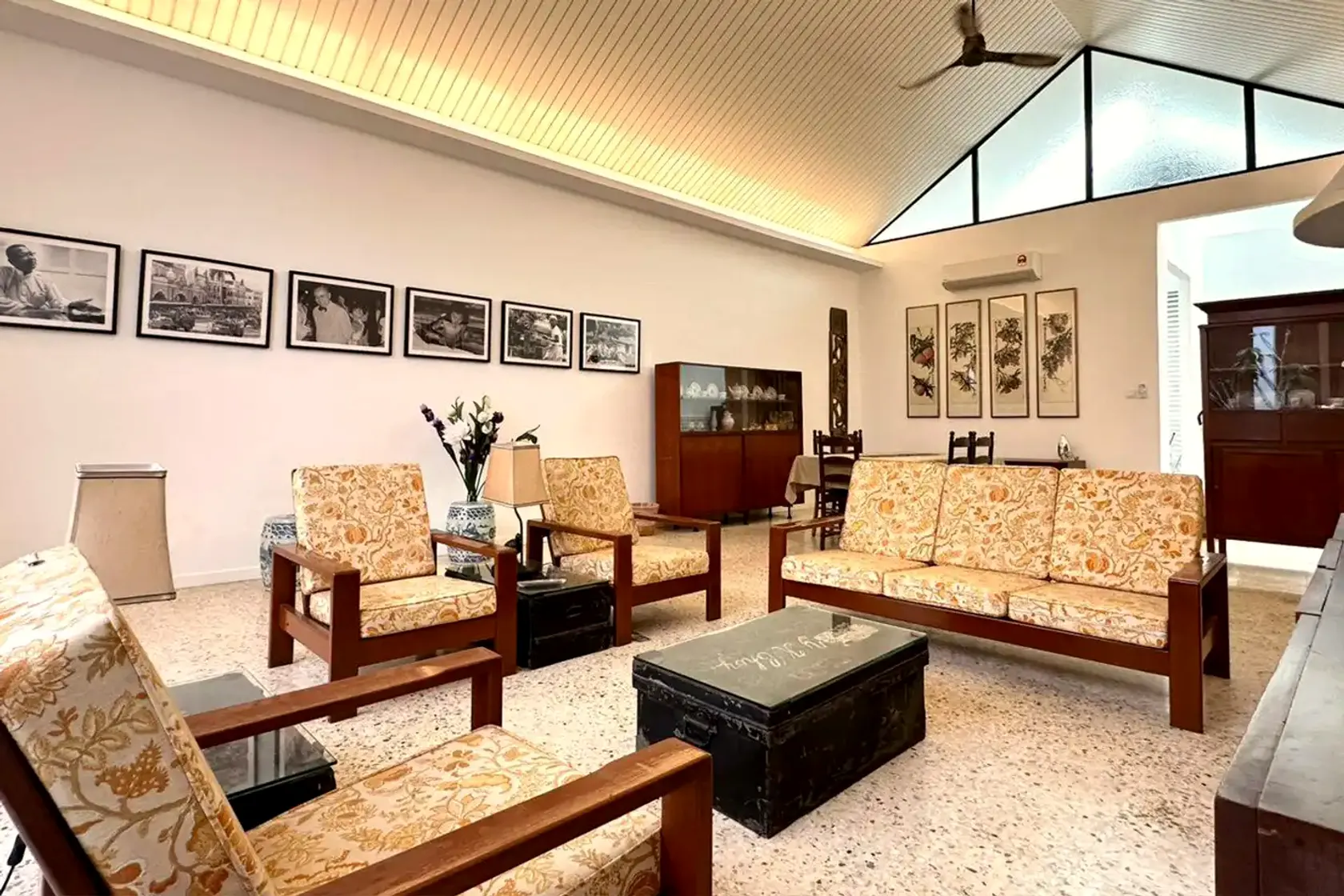
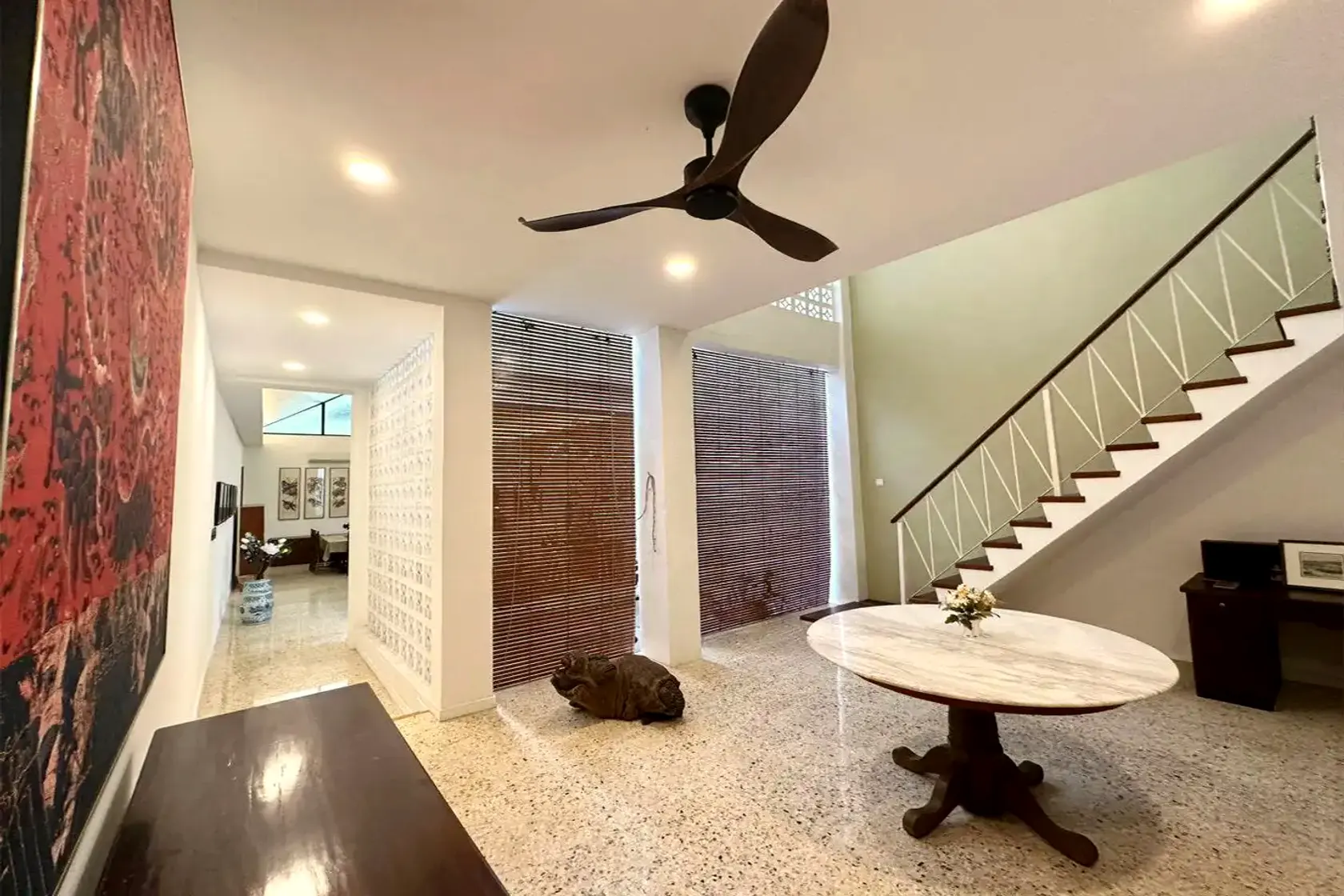
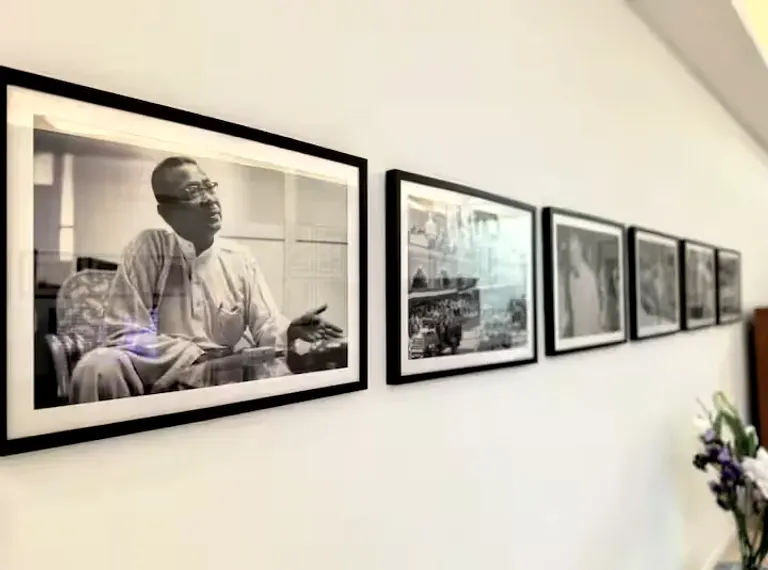
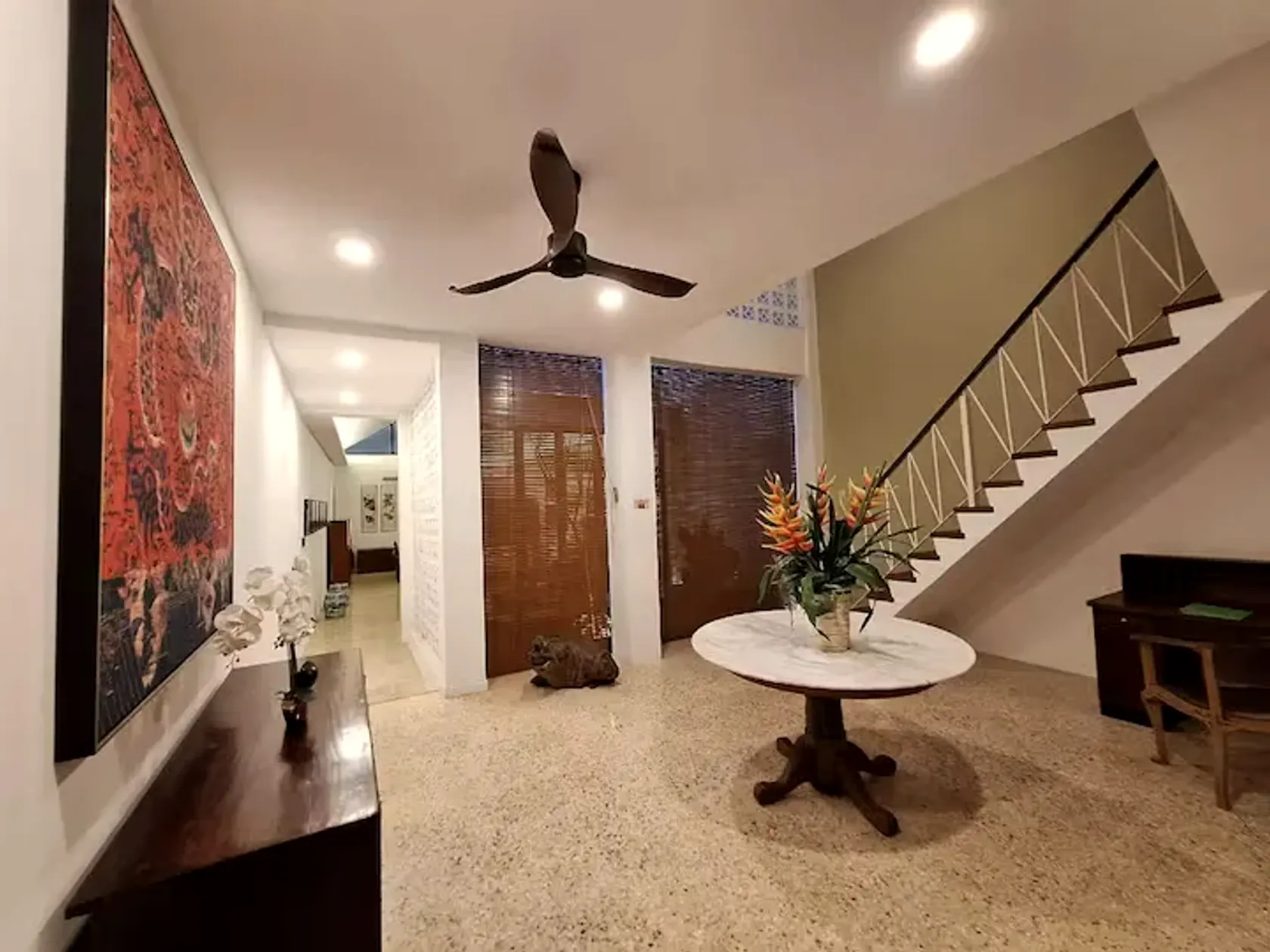
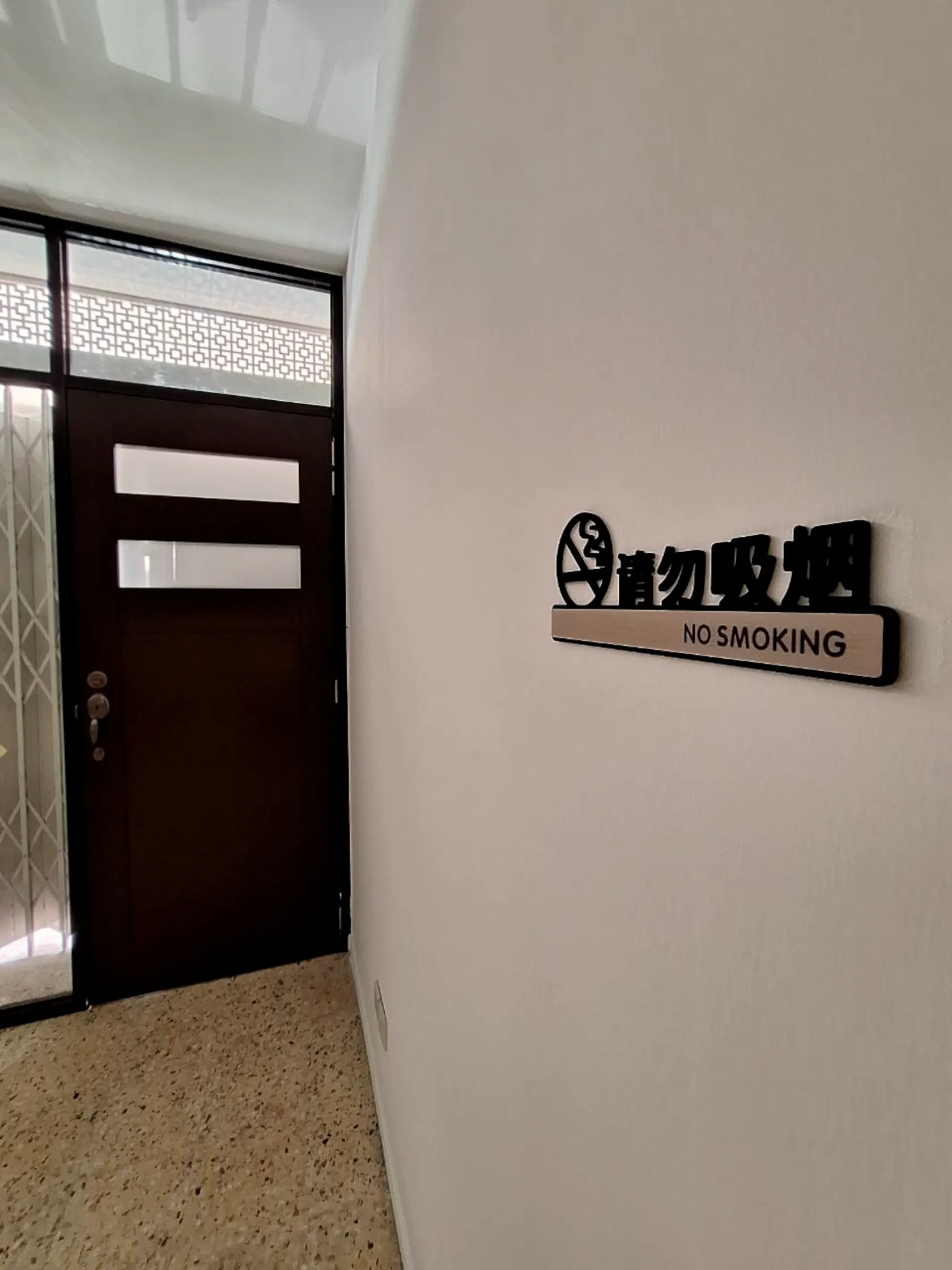
PL. 01No. 34 from across the road — the white lot between the gold dealer and the paint shop.PL. 02The hall, double height under the clerestory. The teak suite in marigold floral is the 1970s Malaysian sitting room done properly; the books are real.PL. 03The stair, original and steep, as 1920s stairs are. The marble table catches the afternoon through the blinds.PL. 04The photograph wall — the town keeps its own record inside the house.PL. 05The entry, looking through to the stair — a marble-top table, heliconia cut that morning.PL. 06請勿吸煙. The house asks in both its languages, and means it.
II
The rooms
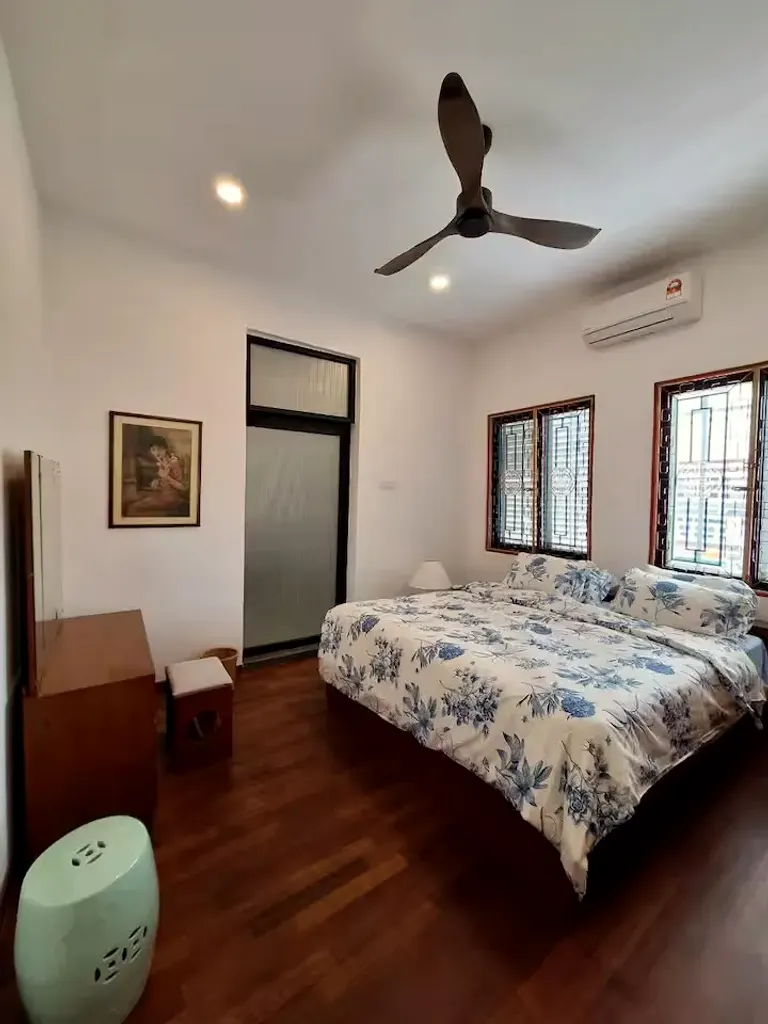
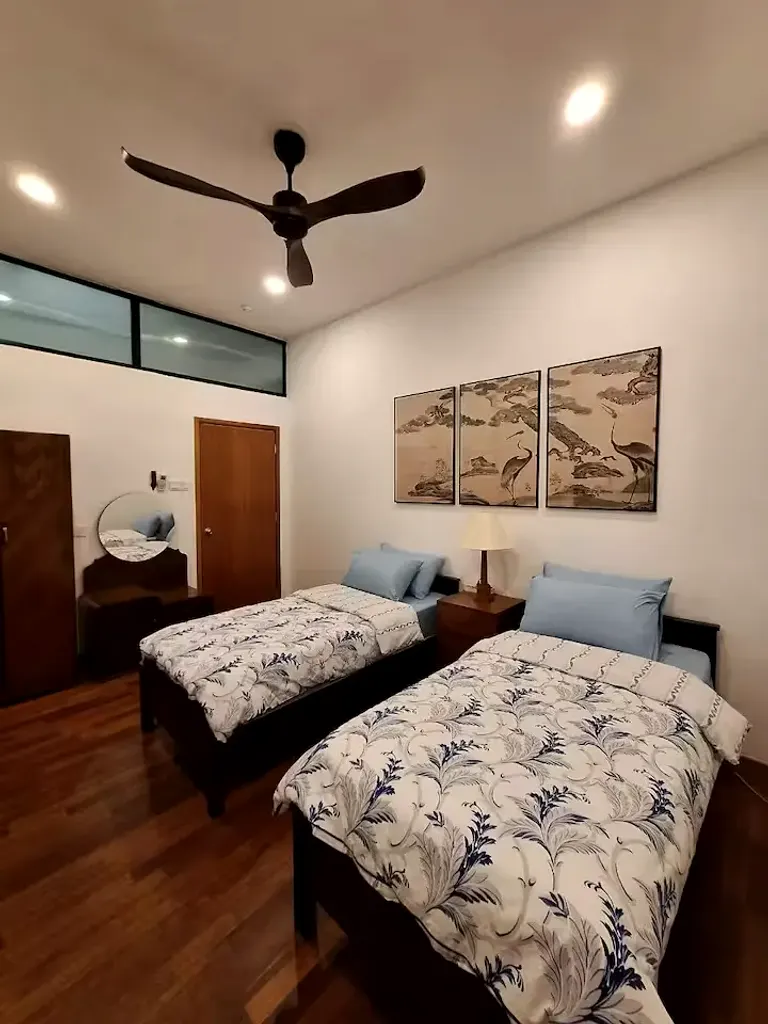
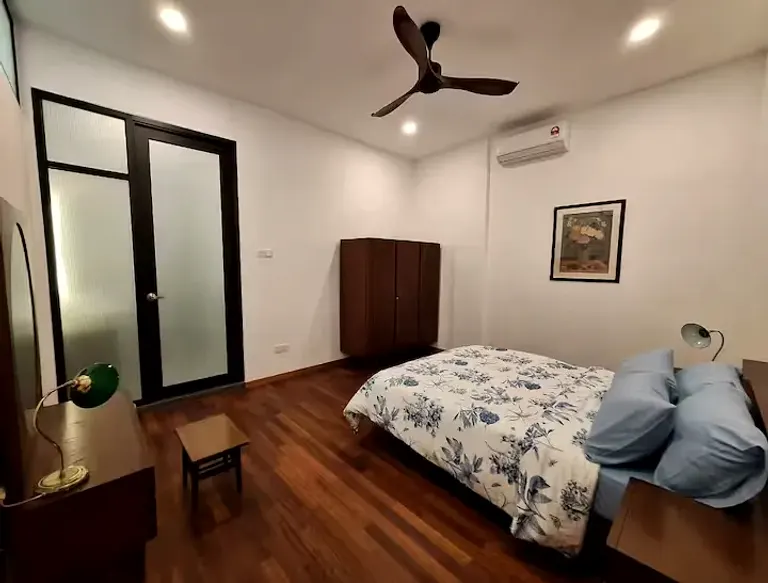
PL. 07The King Room, street side. The window grilles are the original medallions; the Shanghai print came with the family.PL. 08The Twin Room, back of the house — cranes and pines over the beds, and the quiet the light sleepers ask for.PL. 09The Queen Room — teak wardrobe, dressing table, the green banker’s lamp. The seventh sleeper’s futon lives on this floor.
III
The air well
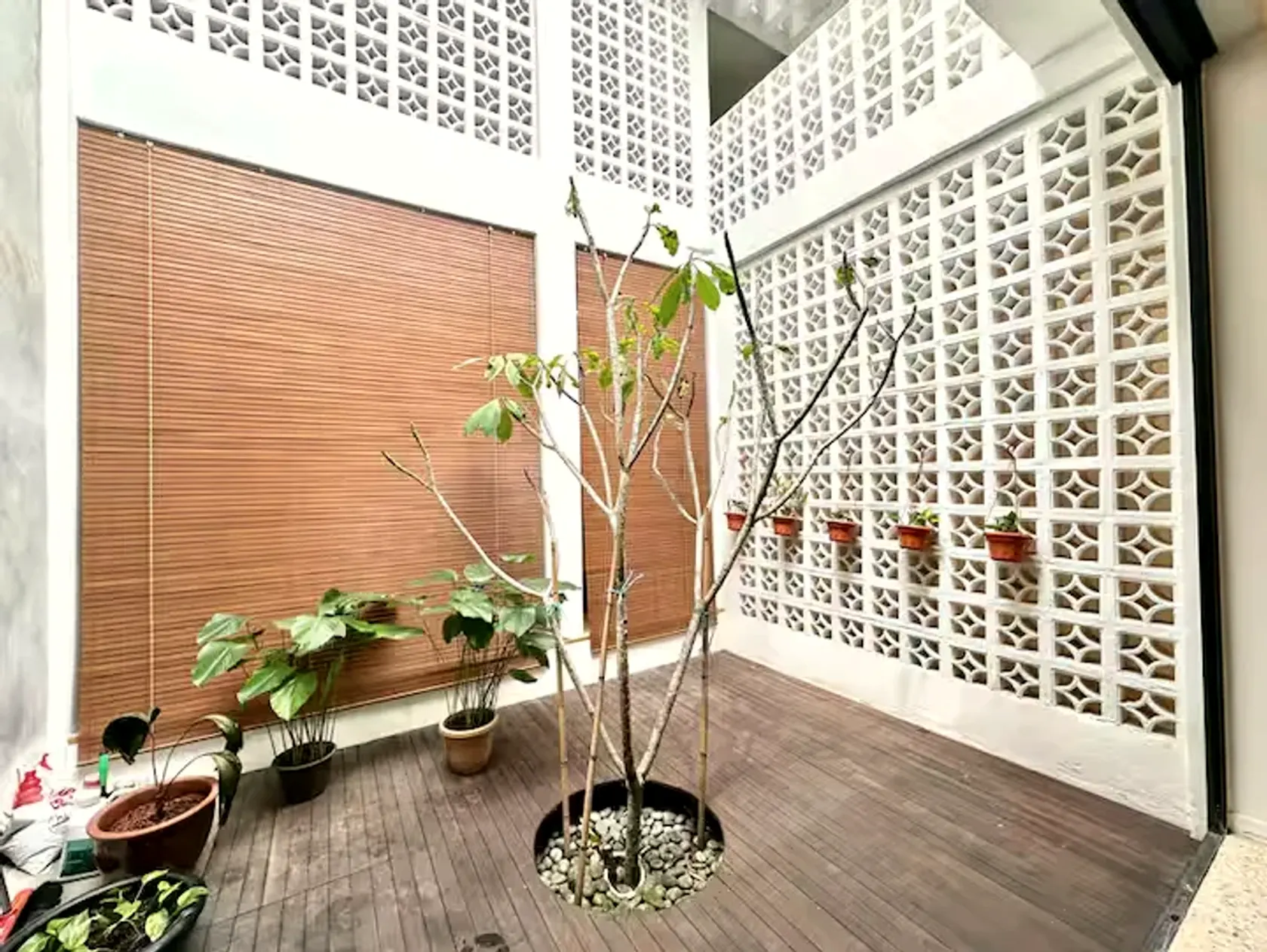
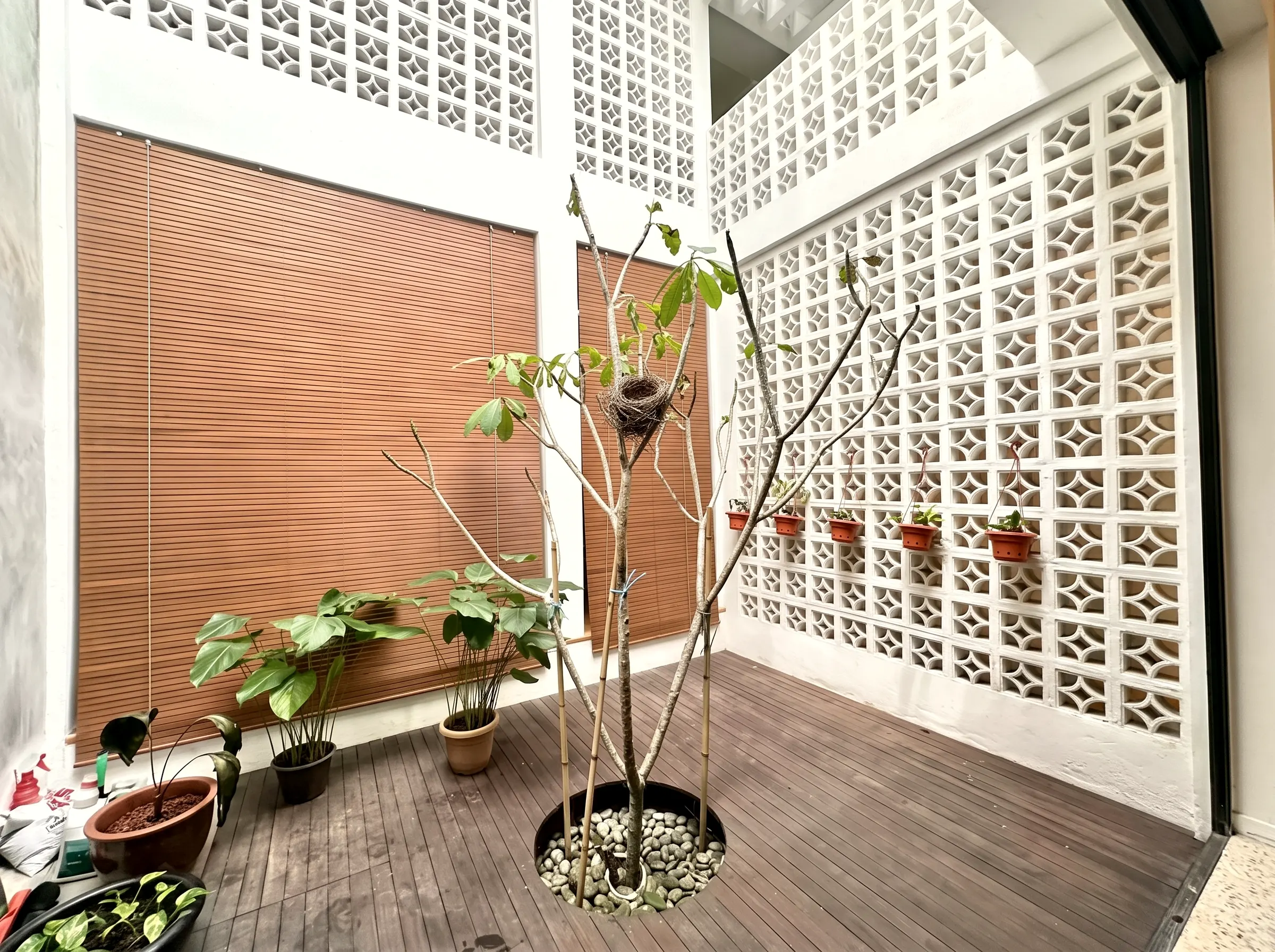
PL. 10The air well. The restoration opened the roof here; the frangipani grows through a circle cut in the deck, and the house breathes through it.
IV
The kitchen and the long table
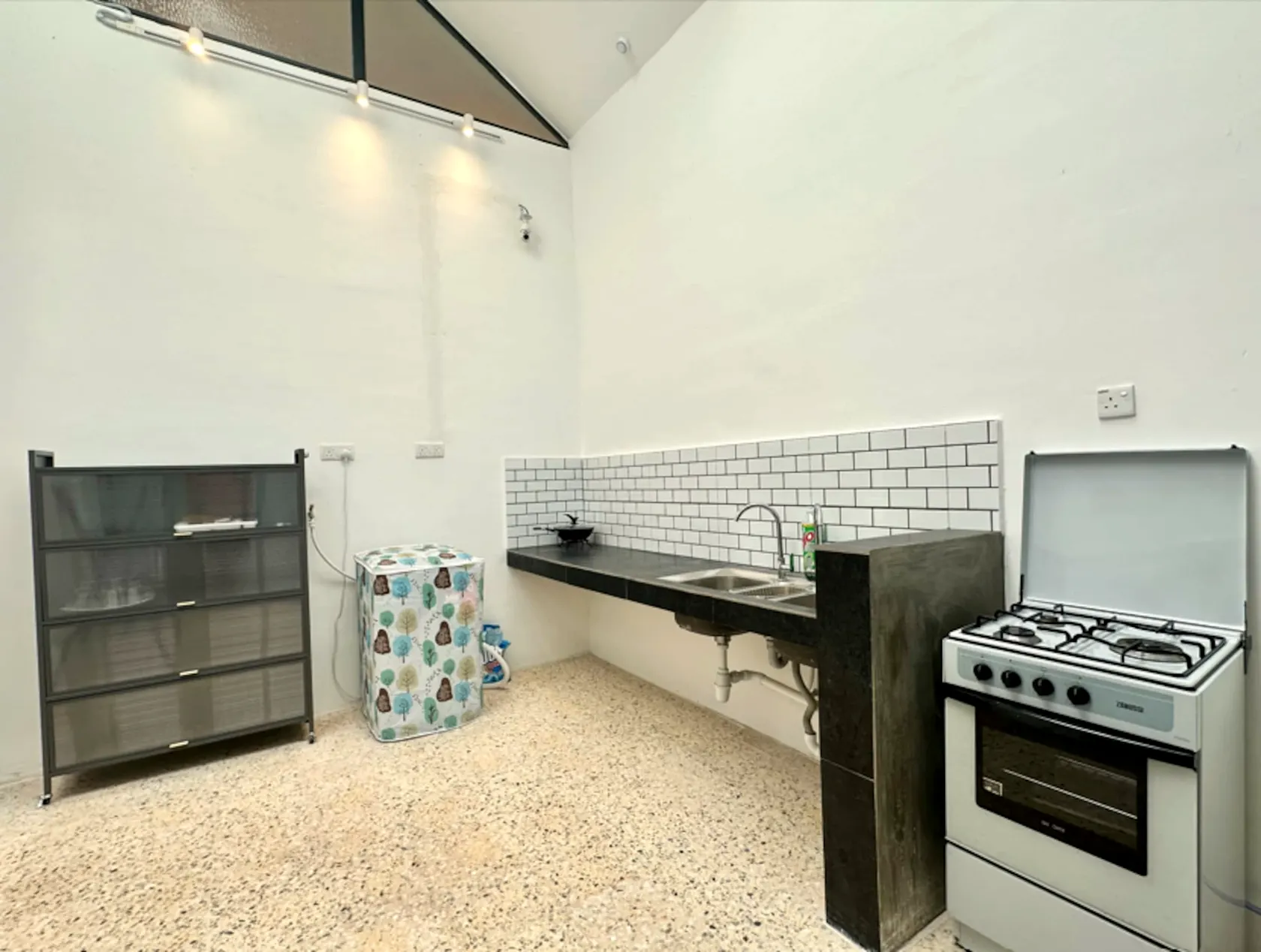
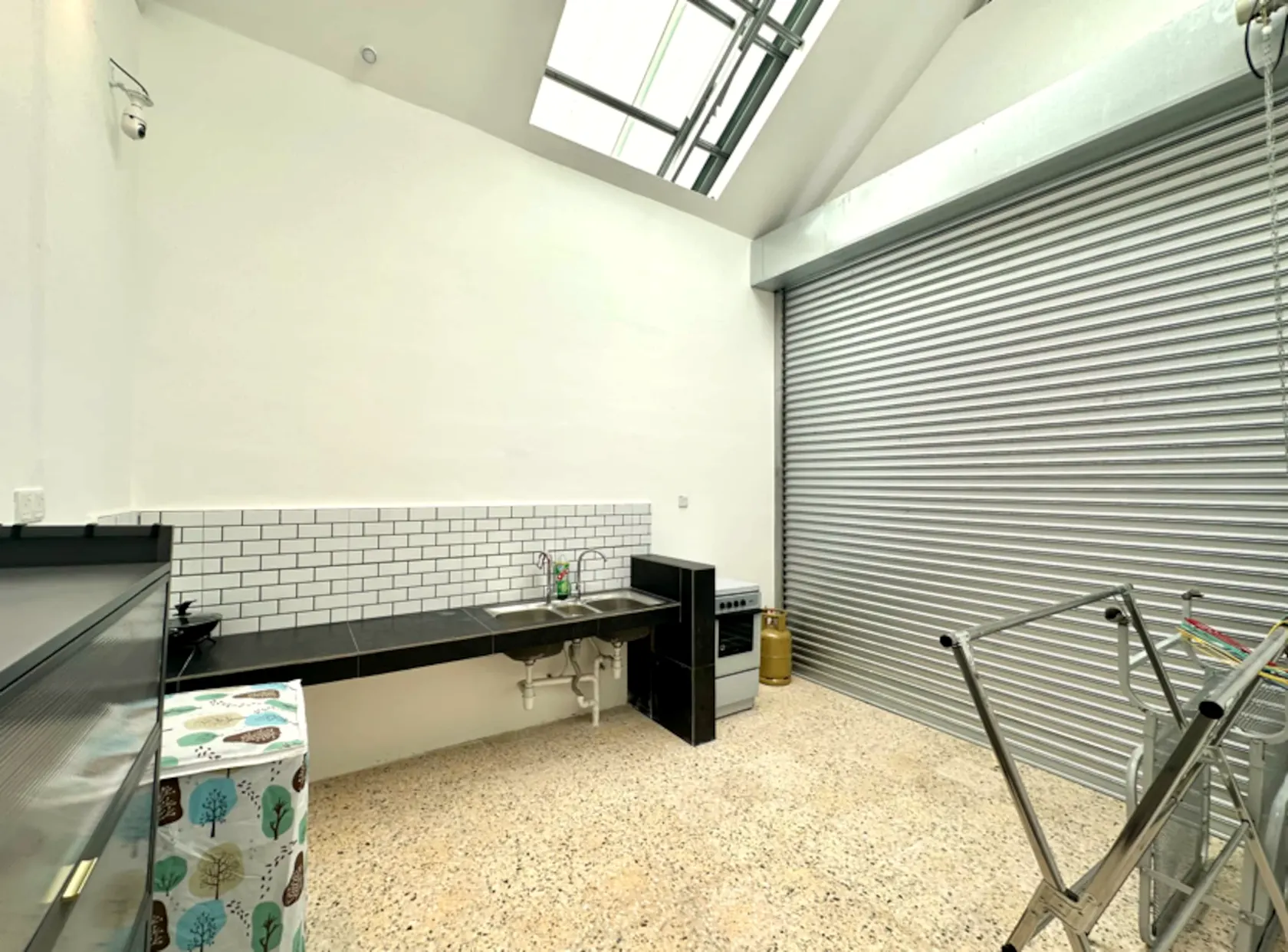
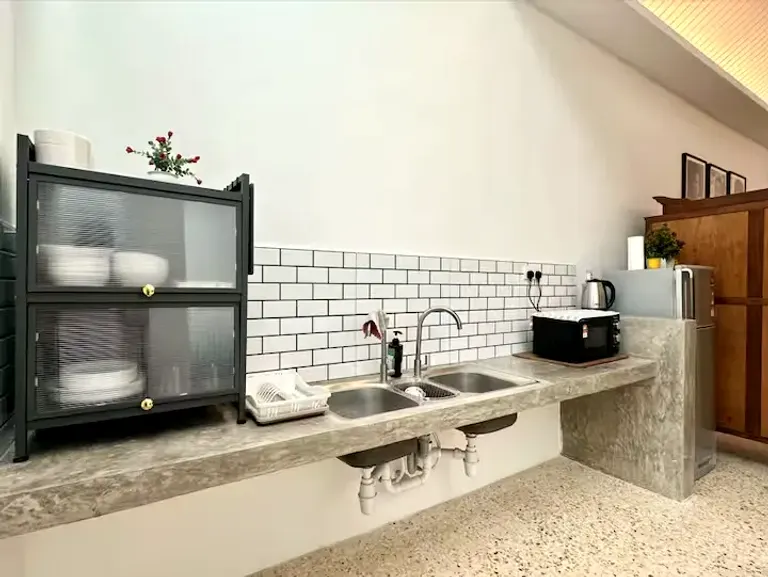
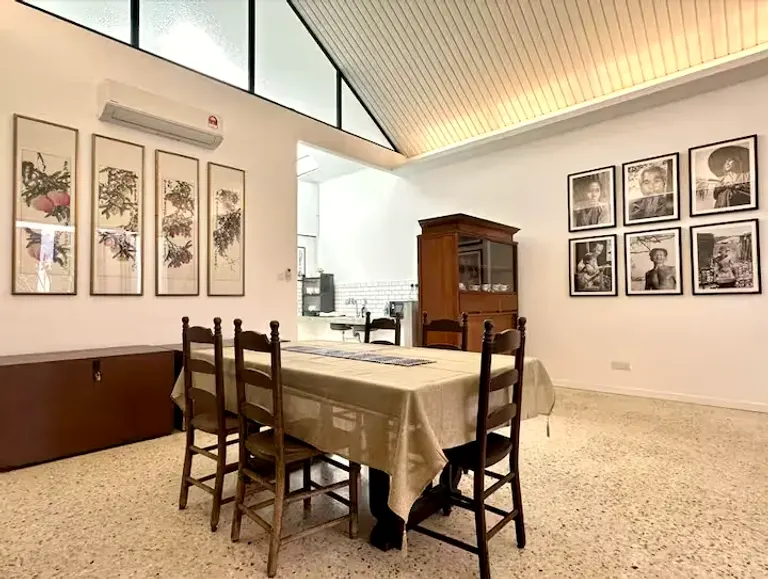
PL. 11The back kitchen, where the gas range lives — the room that does the cooking.PL. 12The same room, turned around — the drying rack, and the shutter to the back lane.PL. 13The dry kitchen — a poured concrete counter, twin sinks, and everything a cooking family needs down to the chopsticks.PL. 14The long table seats the whole house under the botanical scrolls and the portrait wall.
V
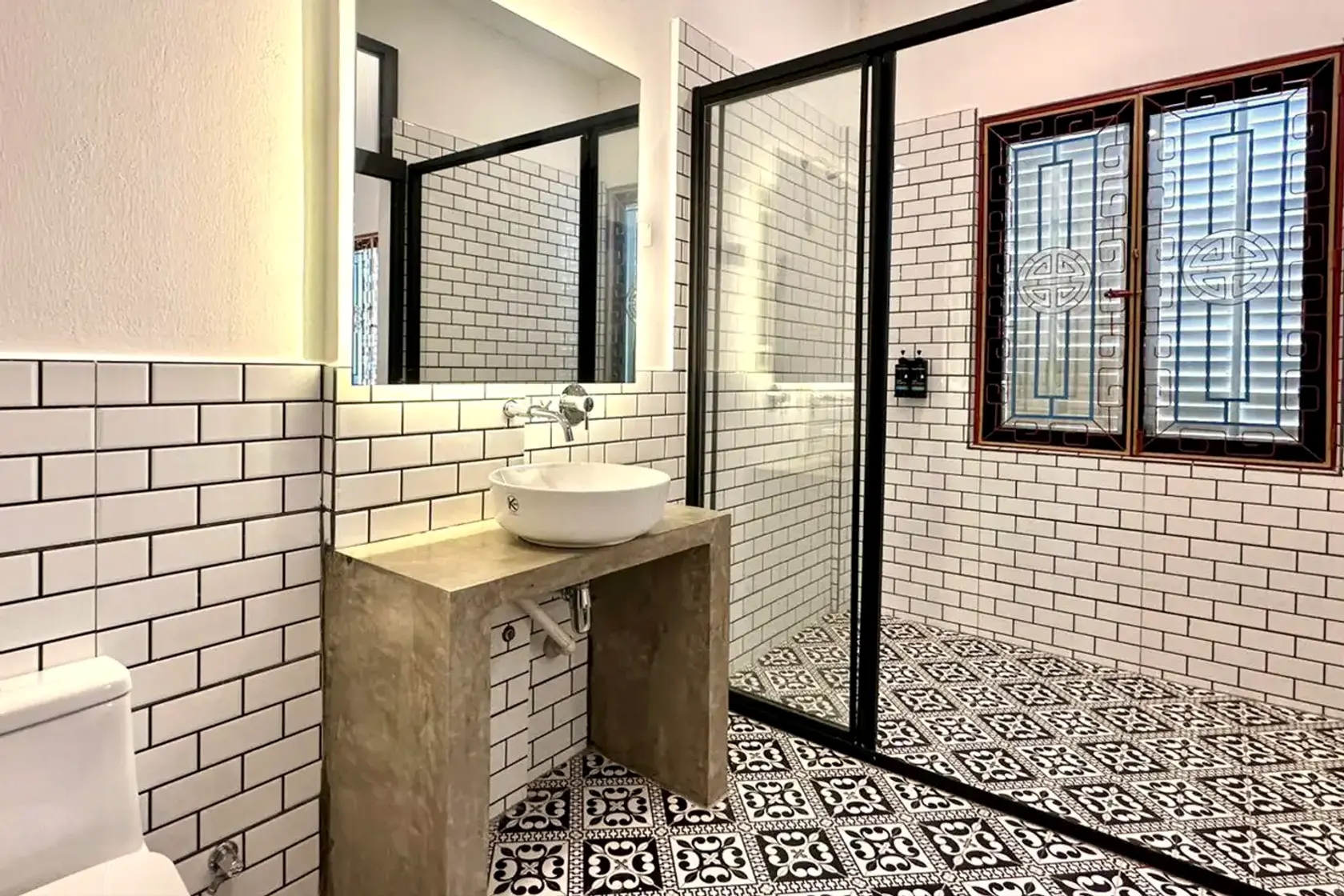
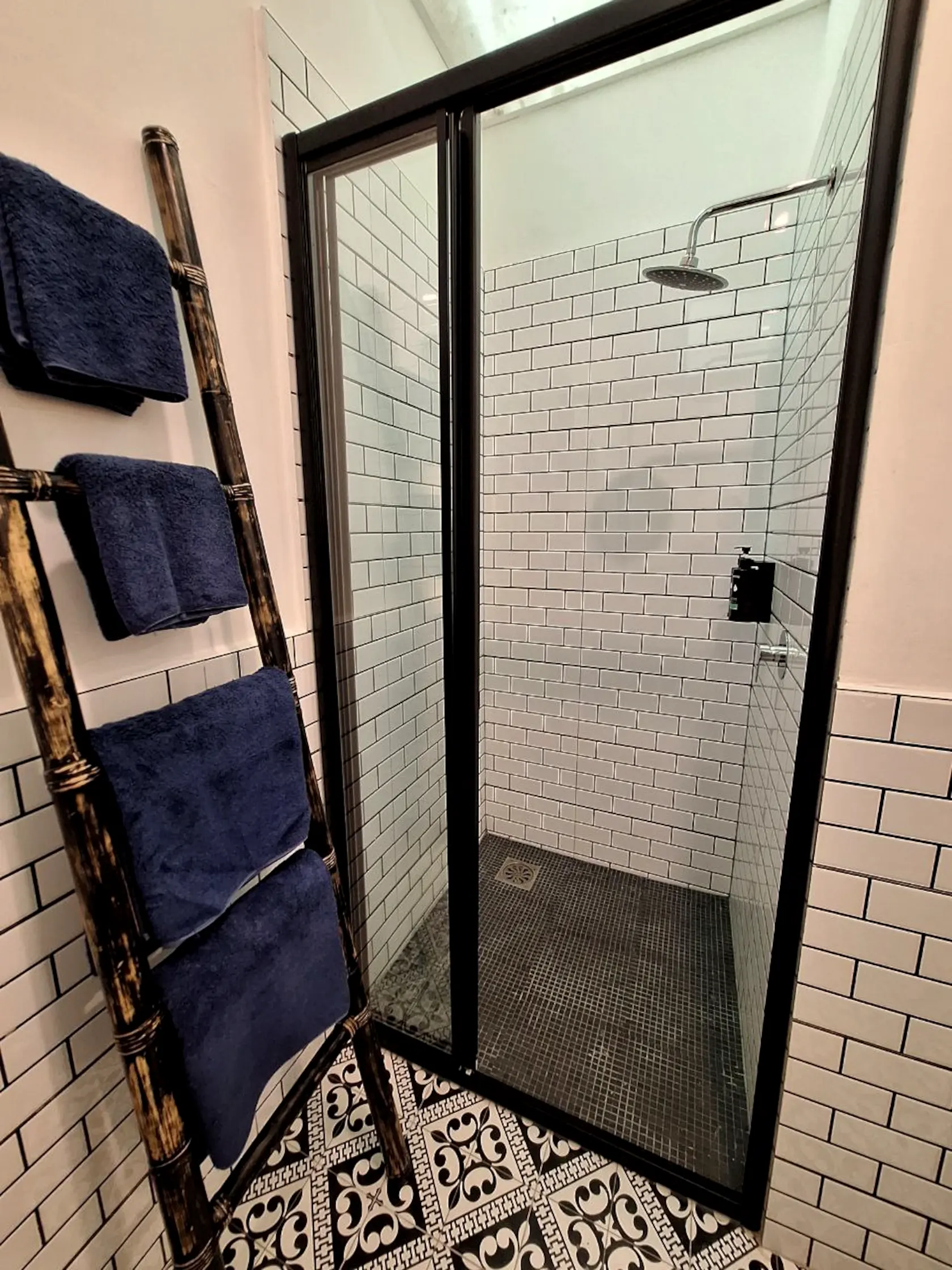
The four bathrooms, the terrace and the laundry
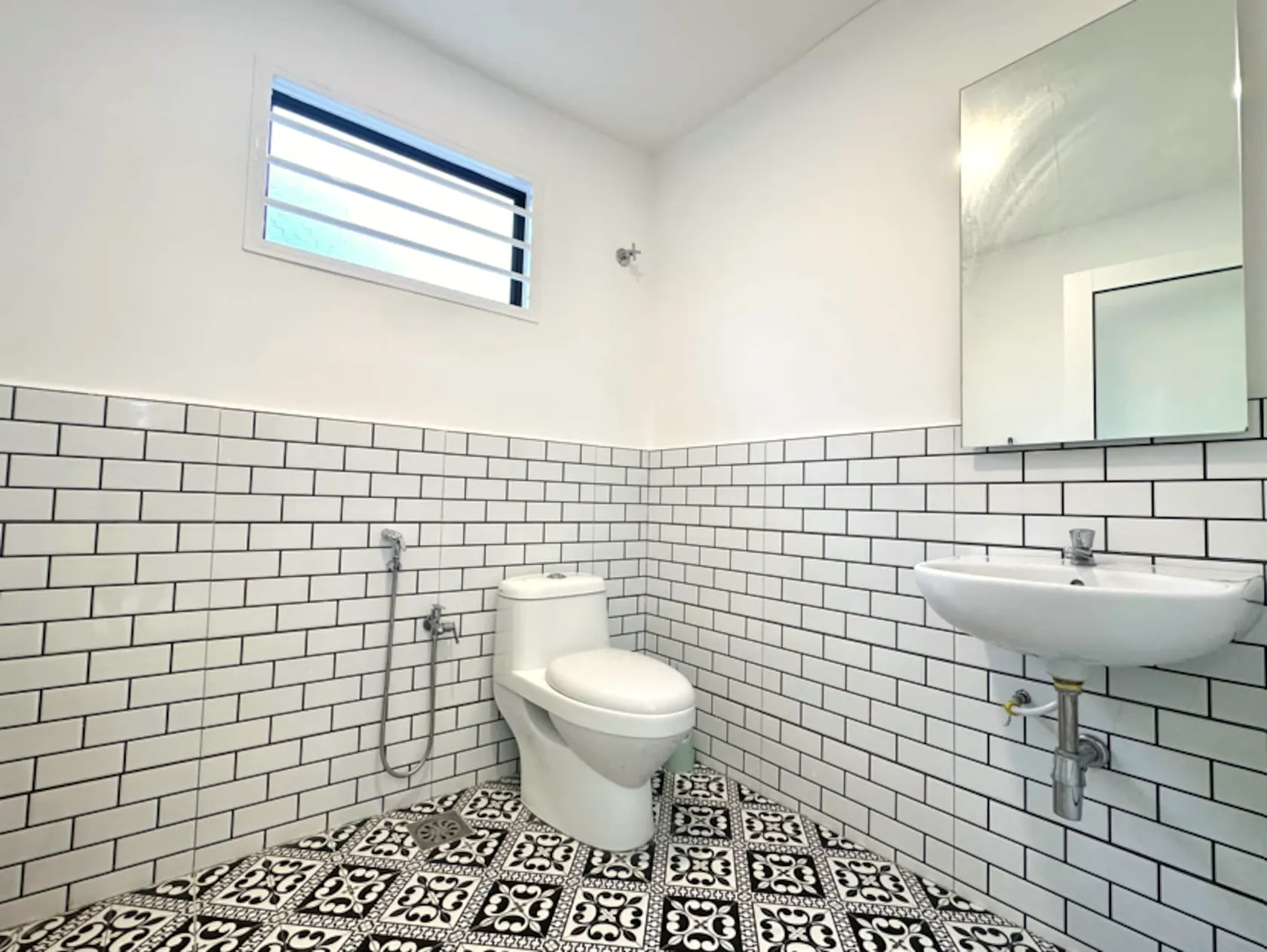
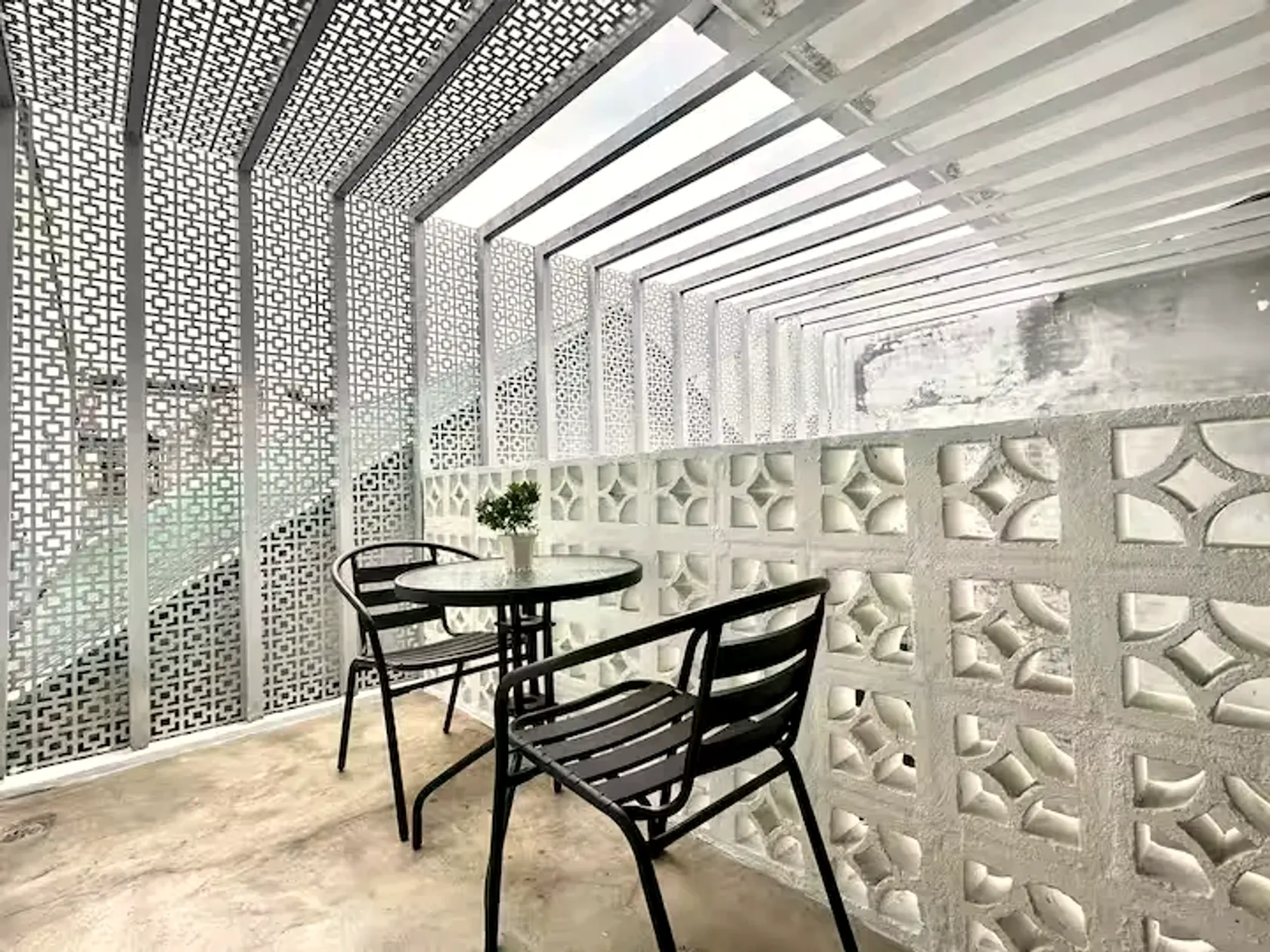
PL. 15The finest of the four bathrooms keeps its Chinese fretwork window — circular longevity medallions painted red and blue.PL. 16The second bathroom: black-framed glass, subway tile, and navy towels on a bamboo ladder.PL. 17The plainest of them, and the highest — a louvred window under the gable.PL. 18The terrace, wrapped in perforated screens that turn the low sun into stripes — the place for the gold hour.
VI
The town, as found
Real photographs of the streets the house stands in.
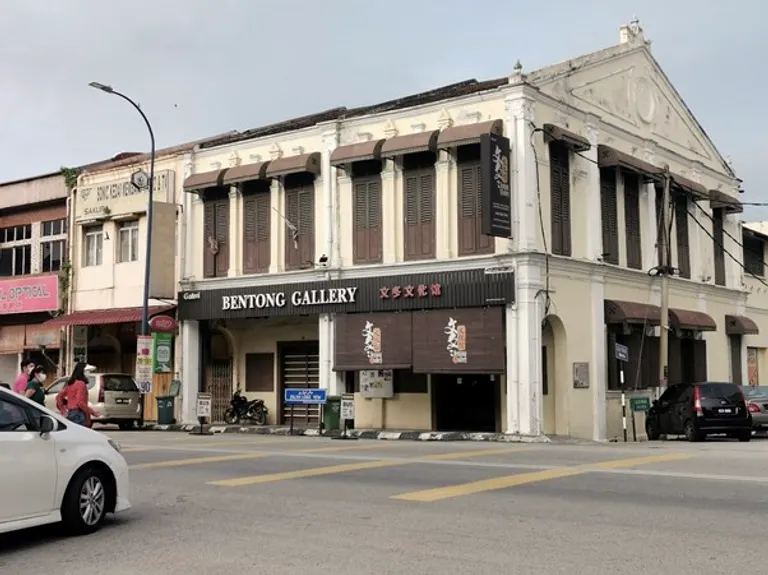
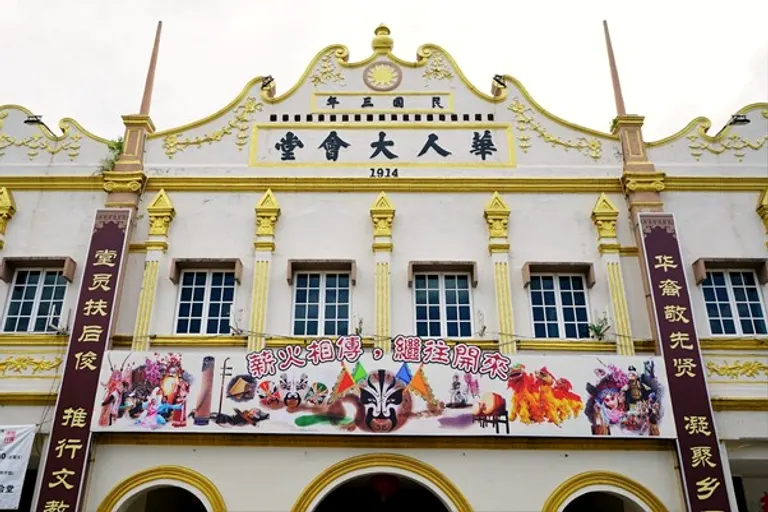
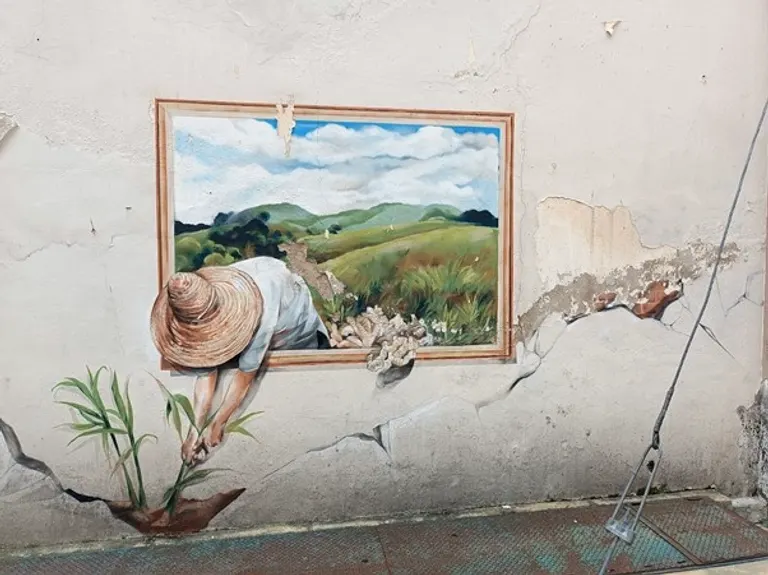
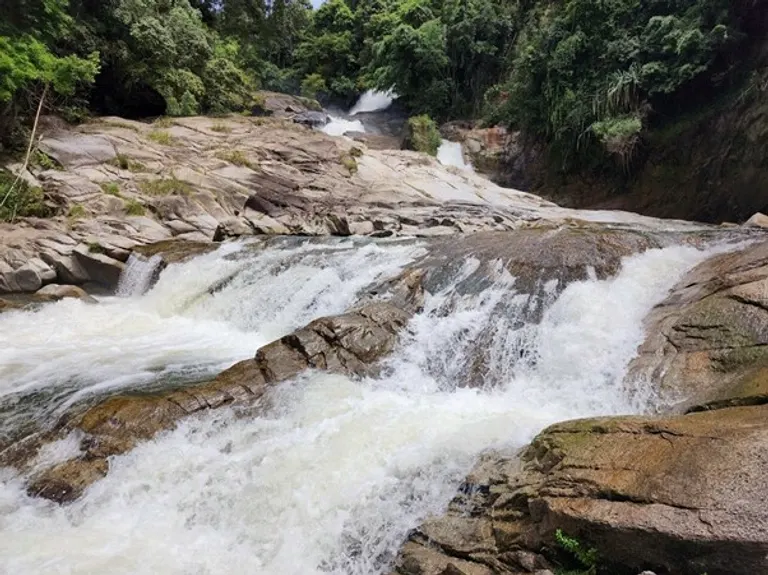
PL. 19The neighbour: Bentong Gallery, in Loke Yew’s former shoplots at Nos. 17–18 — three free halls of the street’s own history.PL. 20The Chinese Assembly Hall, 1914 — five minutes on foot, and older than the house.PL. 21The town paints its own crop: Bentong ginger, famous enough for murals.PL. 22Chamang Falls, fifteen minutes by car — photographed, not imagined.
VII
Study frames, honestly
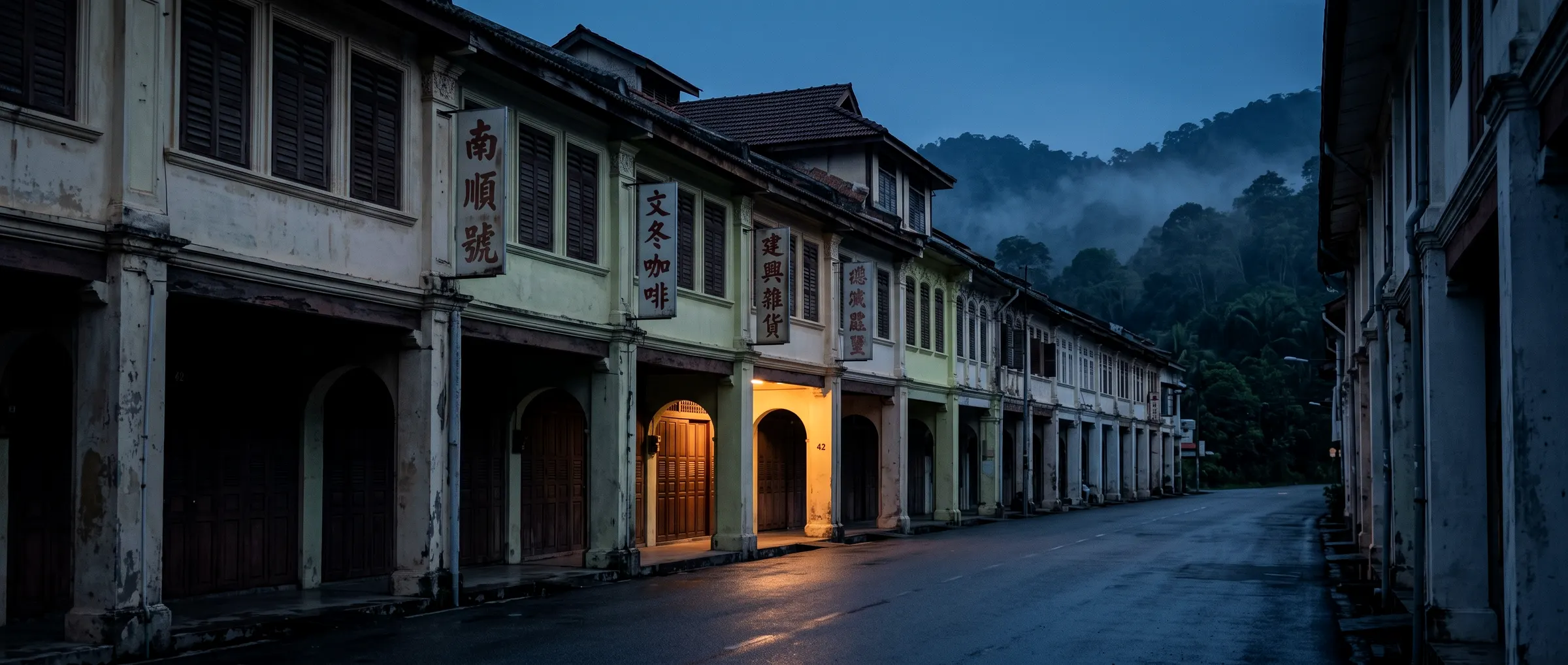
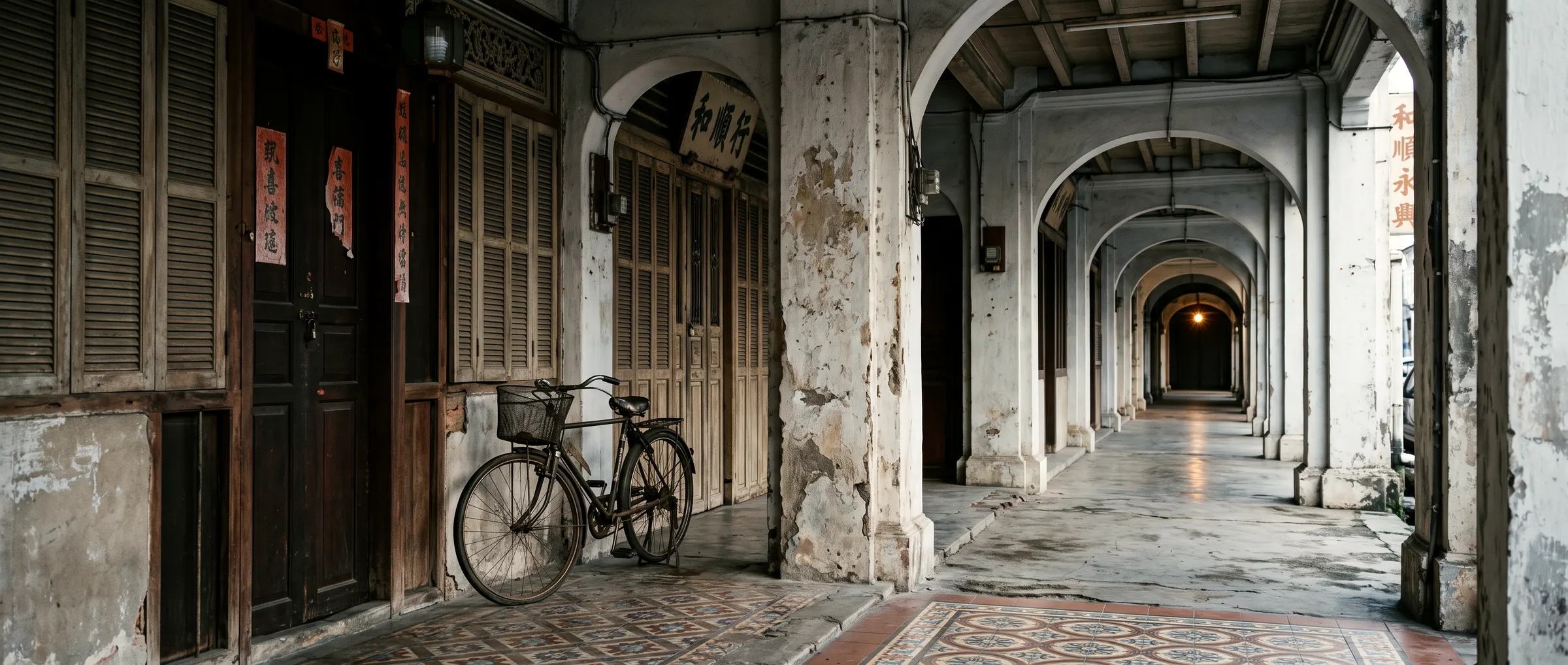
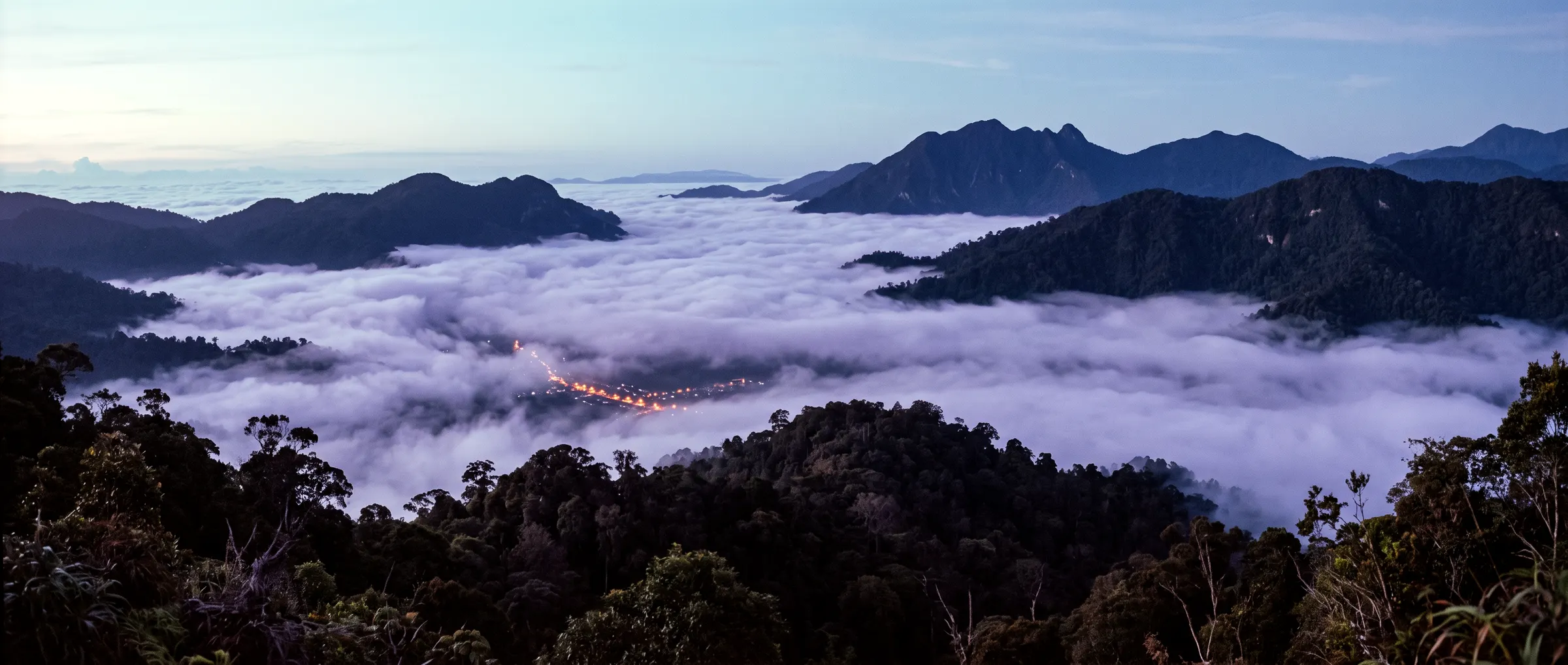
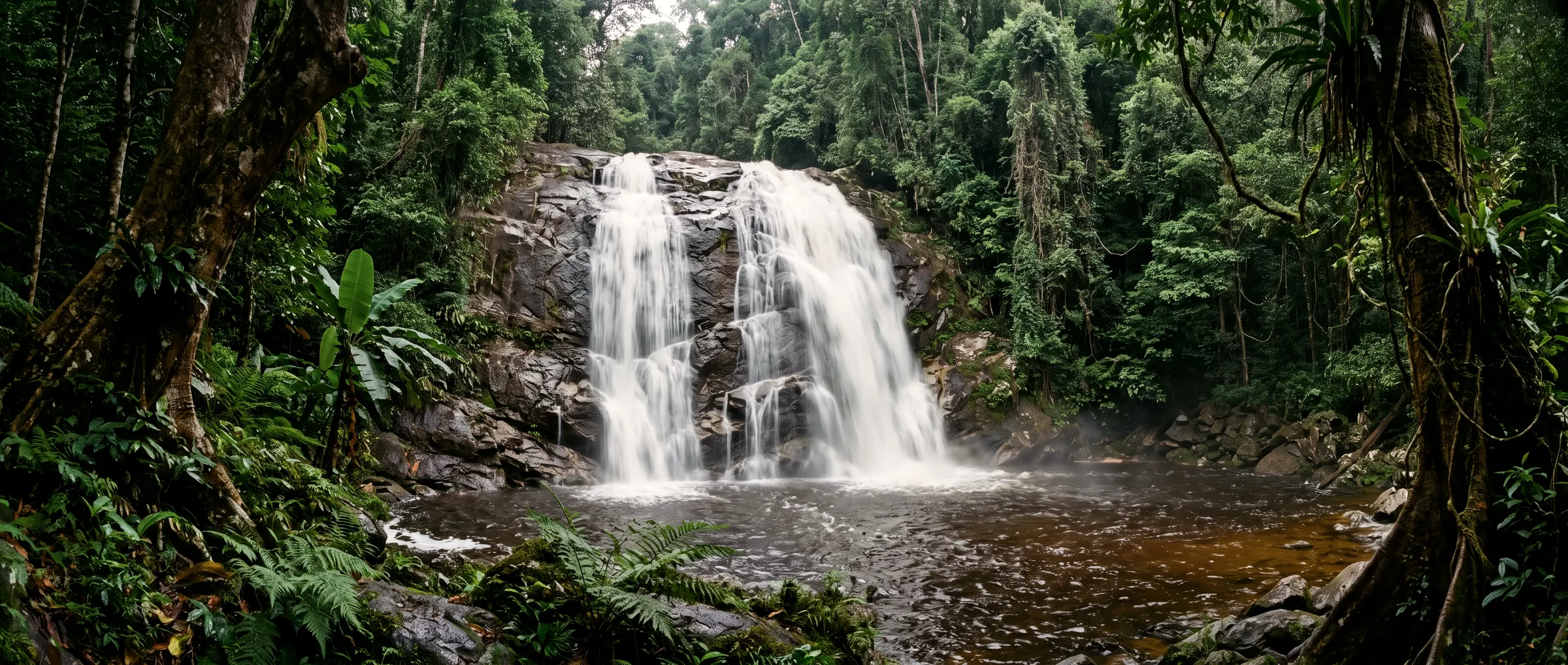
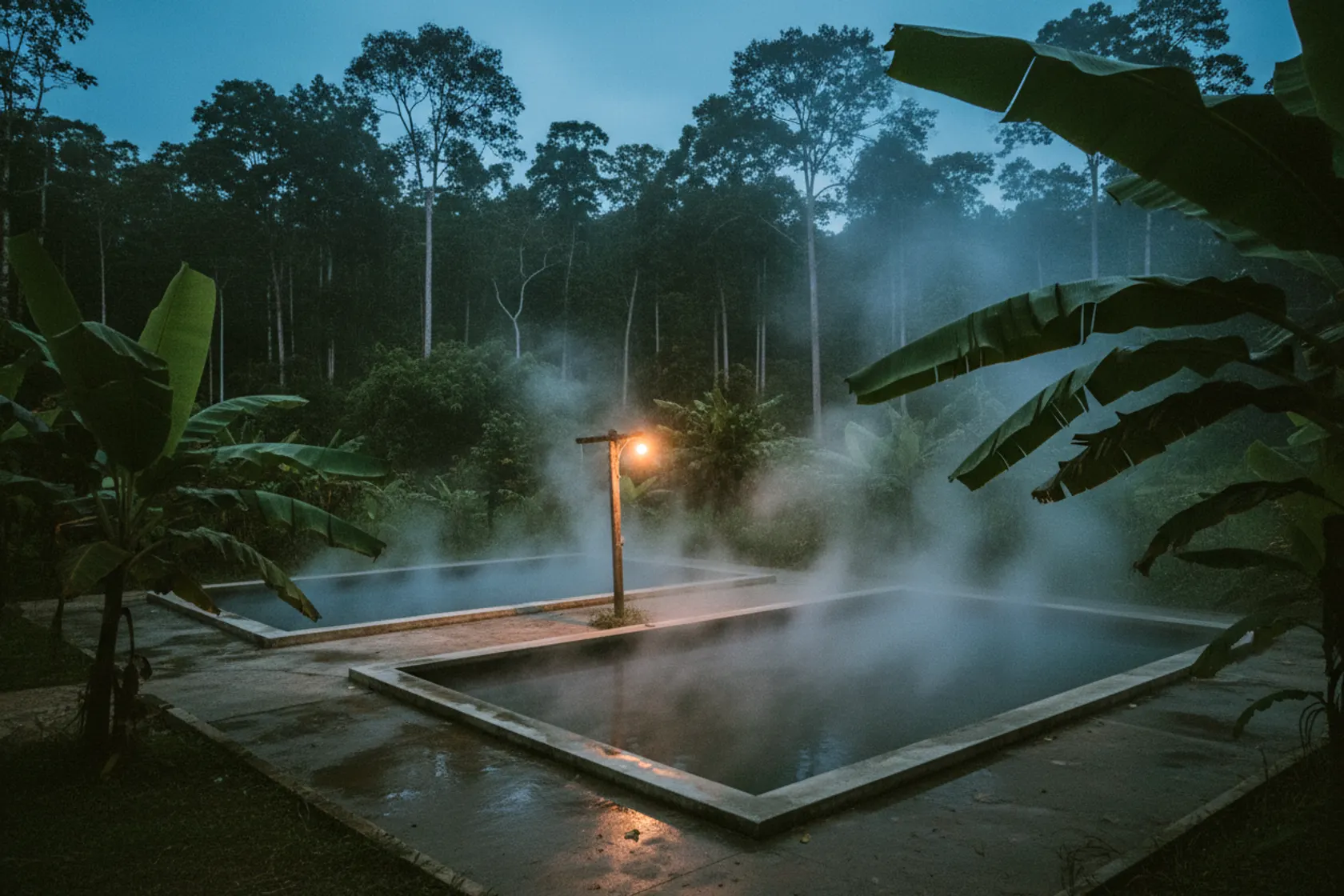
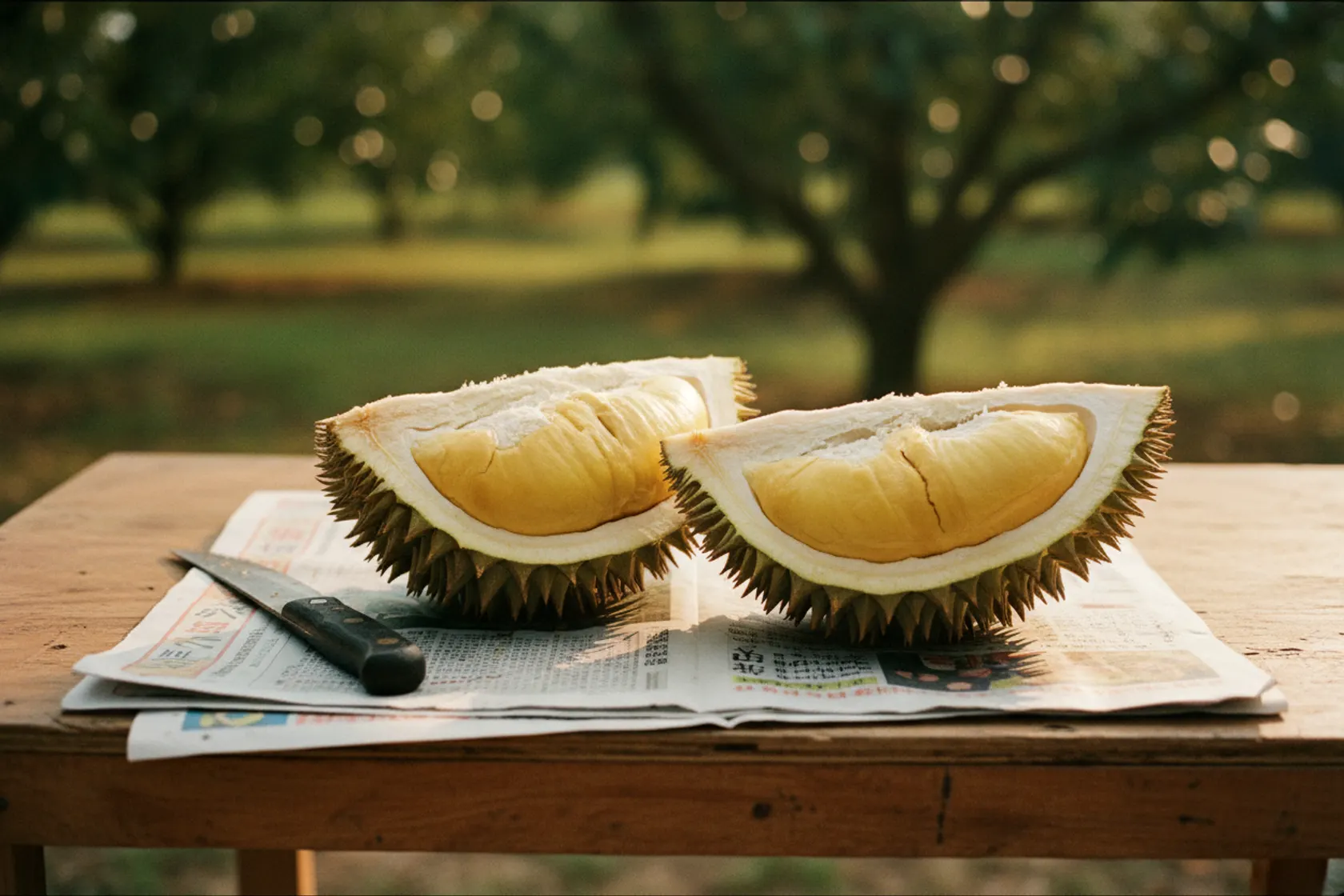
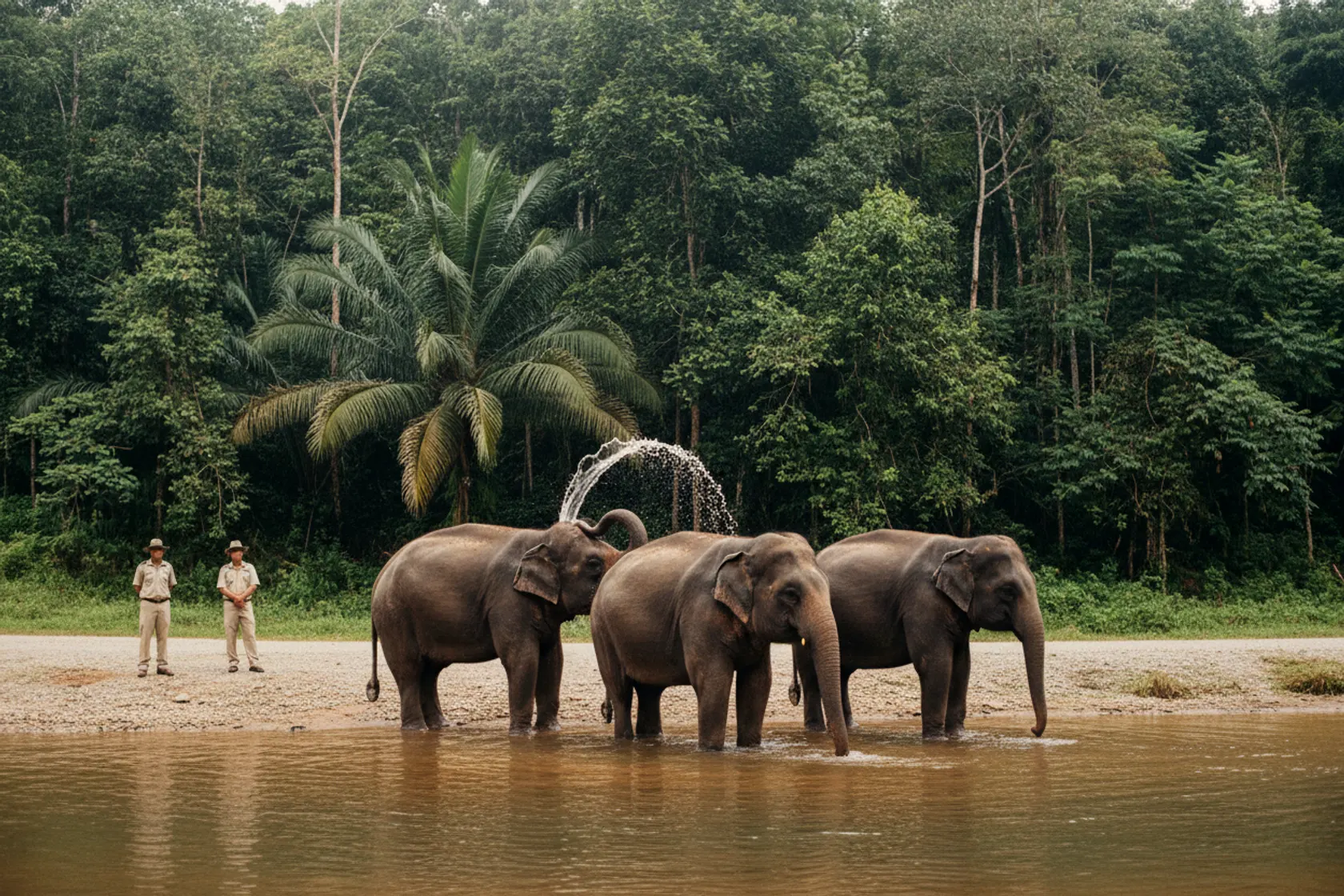
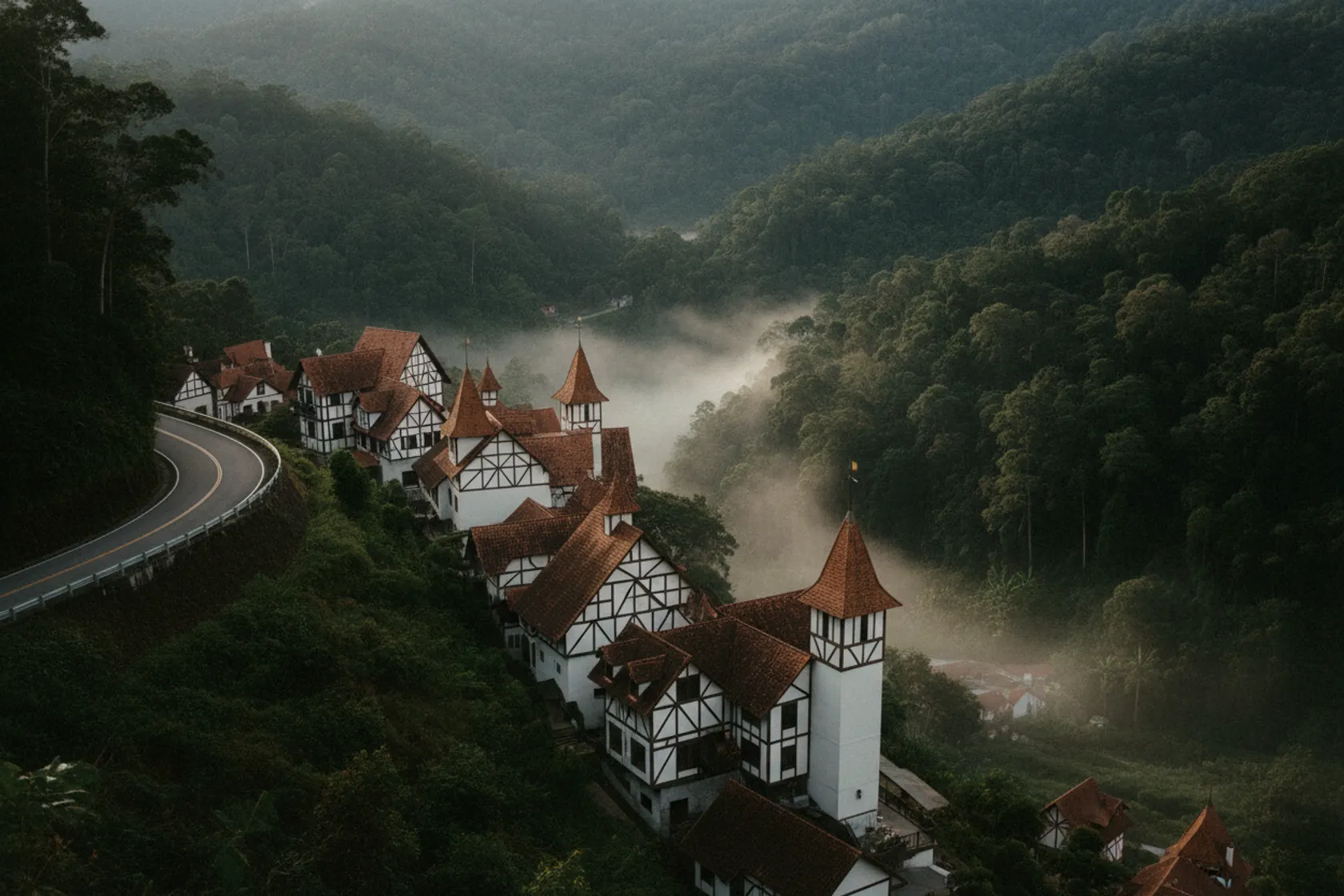
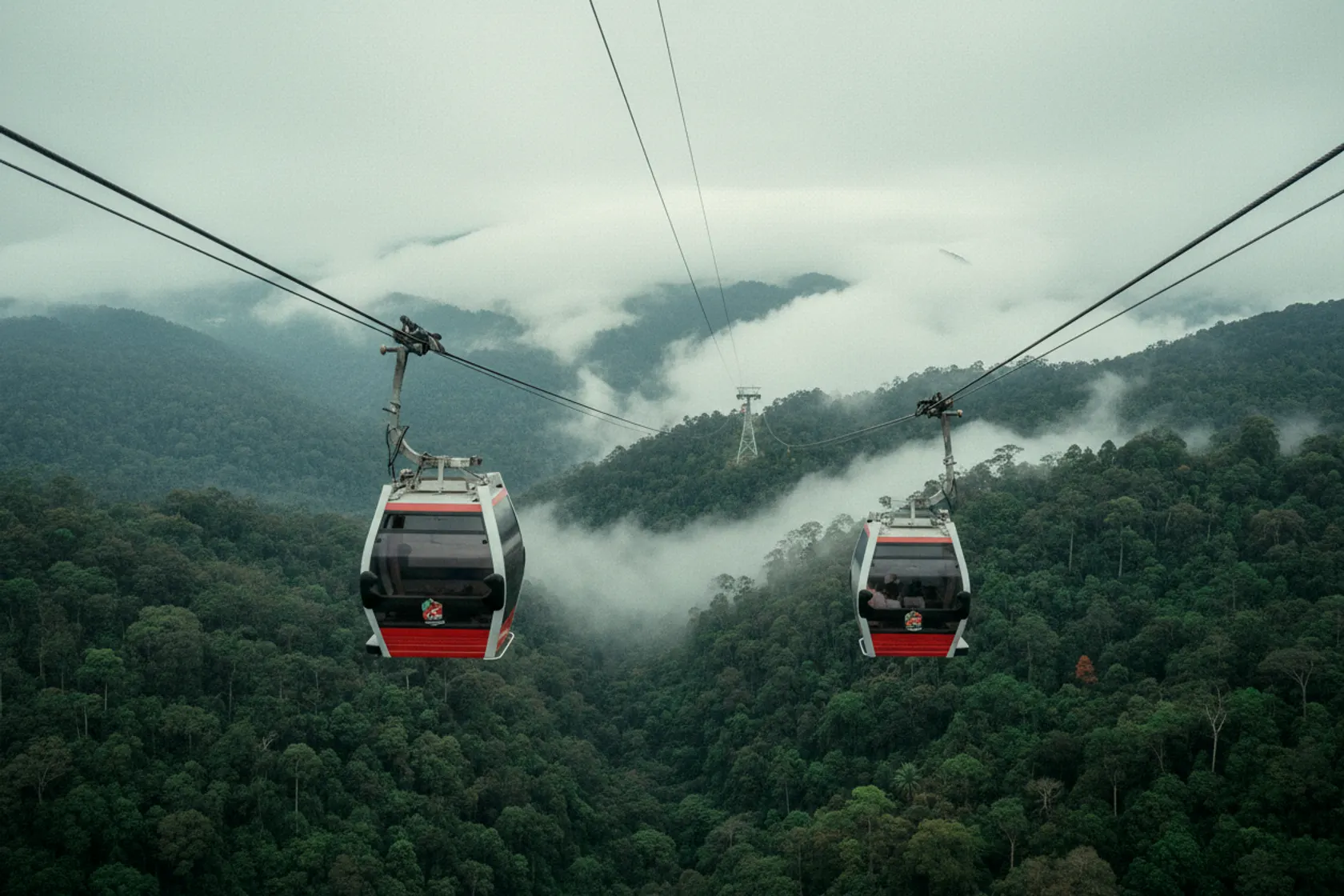
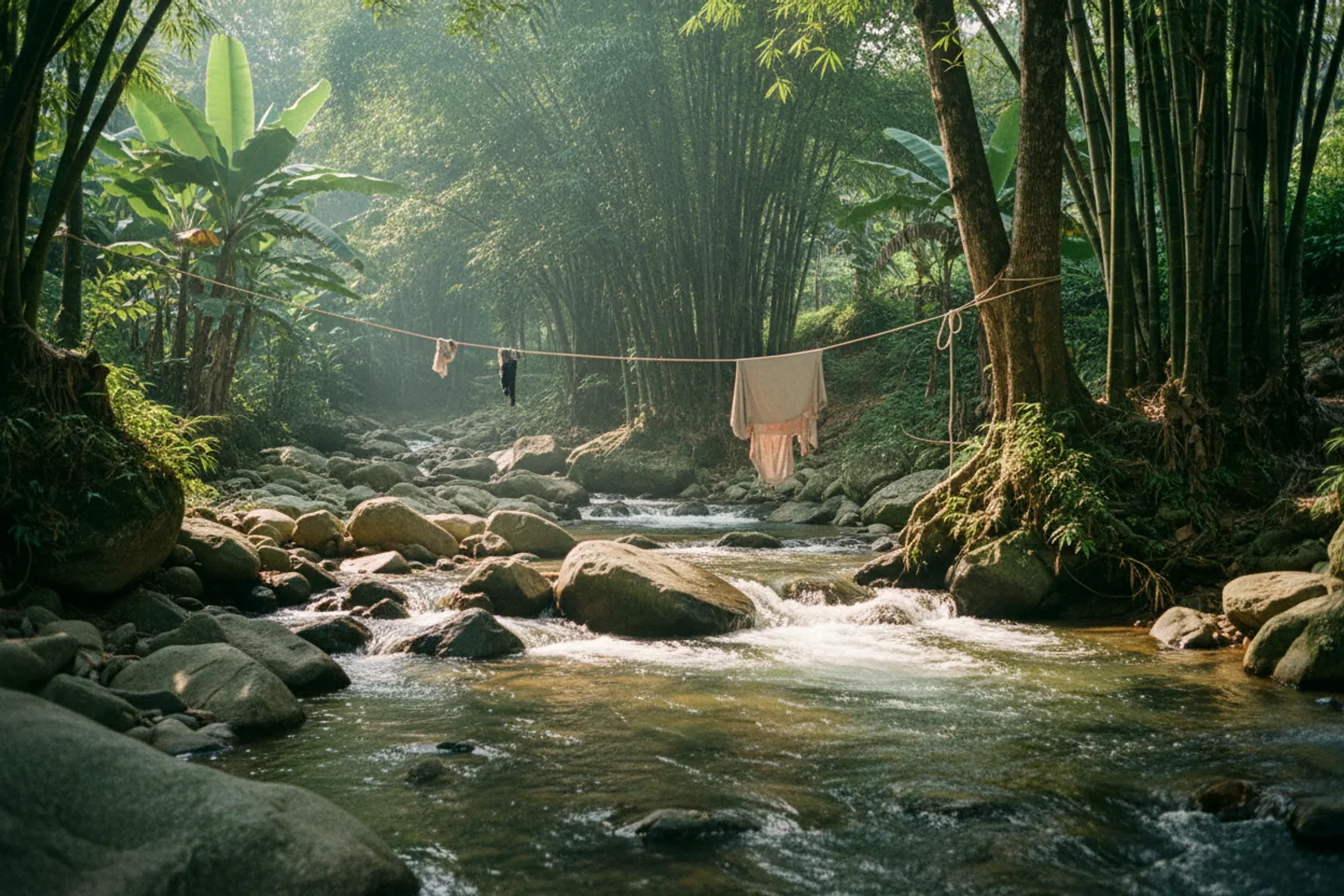
Generated impressions — the album says so plainly. They stand in until the town can be photographed in every light; none depicts the house itself untruthfully.
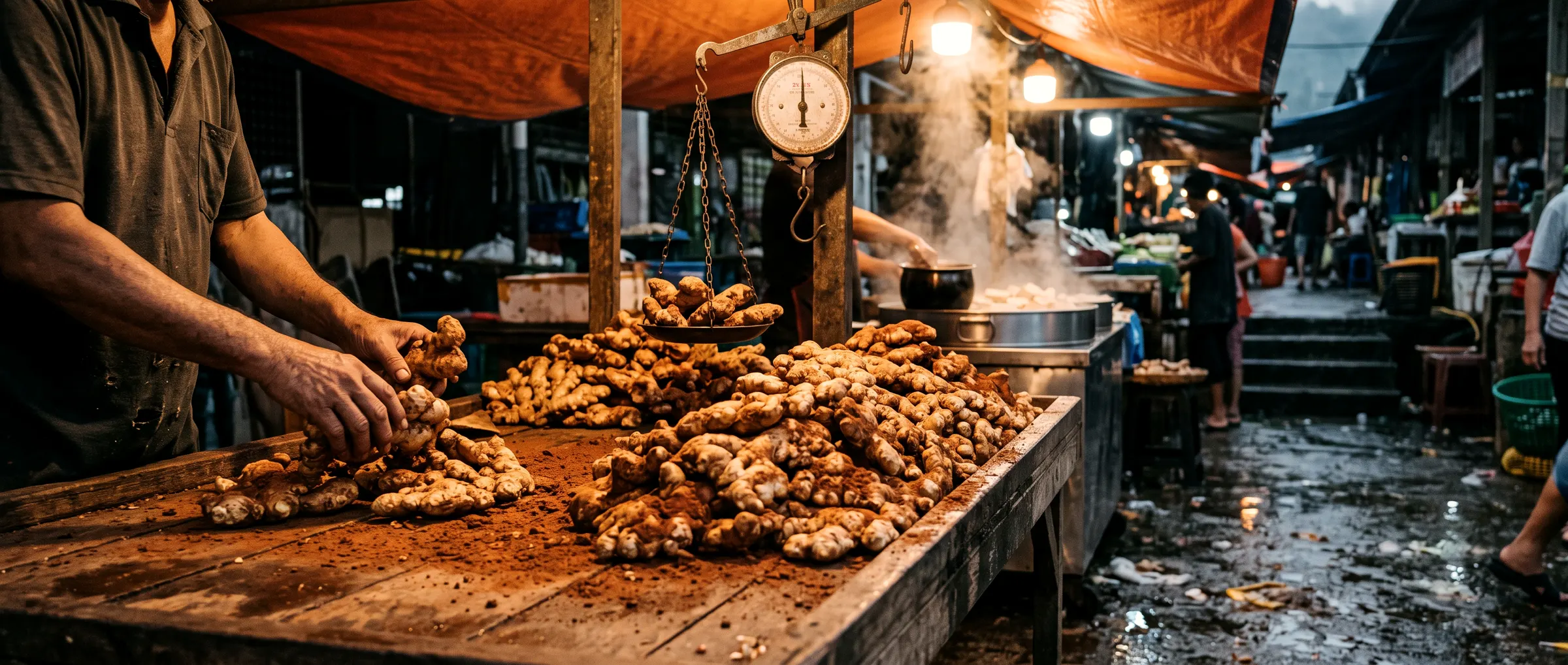
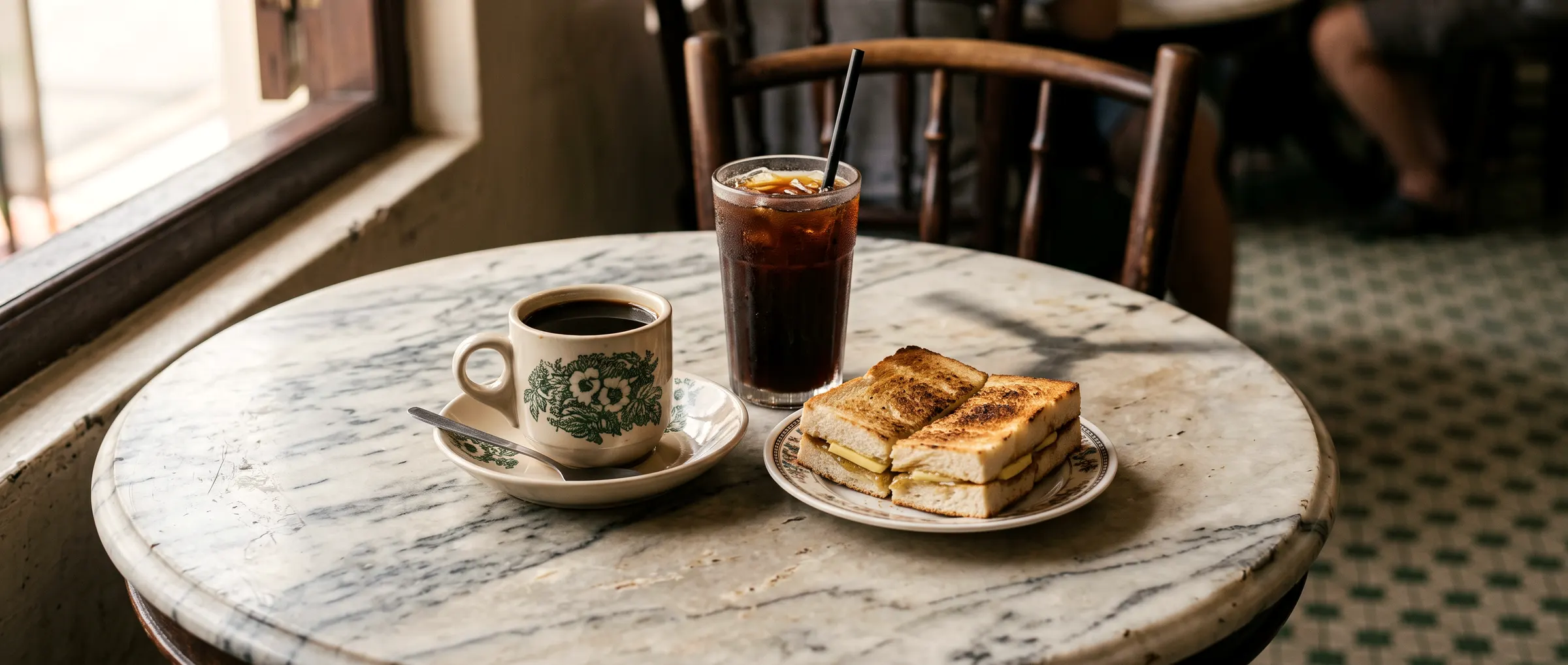
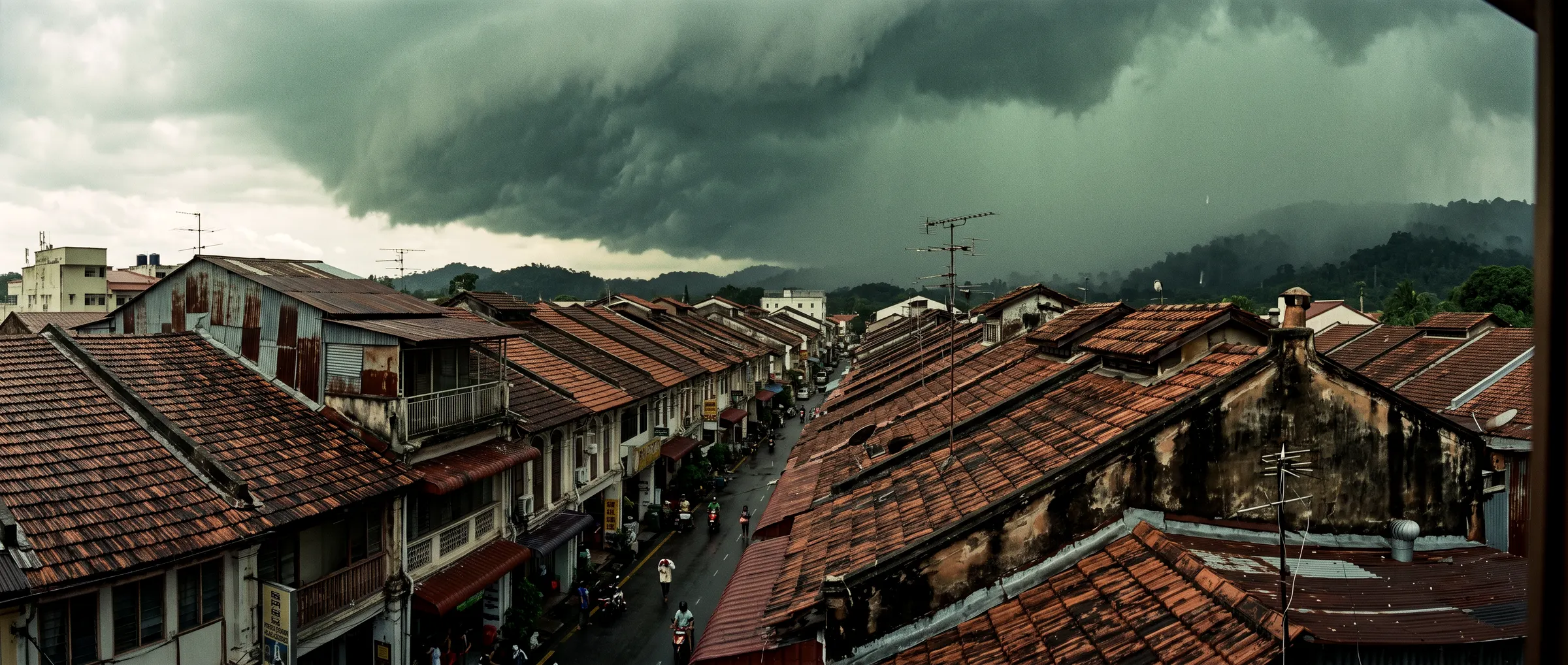
PL. 23Jalan Loke Yew at first light, as the fable sees it.PL. 24The five-foot way — the covered walk every shophouse lends the street.PL. 25The wet market’s old ginger, an impression of 07:00.PL. 26Kopitiam marble, kaya toast, two kinds of coffee.PL. 27The courtyard again — but with the storybook nest the homepage keeps, the robin’s stage, added by hand.PL. 28The four-o’clock storm arriving over the roofs.PL. 29The sea of clouds above the town — an hour’s climb, most clear mornings.PL. 30Falling water, the sound Bentong keeps behind every hill.PL. 31The kampung hot spring at dusk — free, unpolished, twenty minutes away.PL. 32Musang King at the source, June to August, honestly.PL. 33Kuala Gandah’s rescued herd at the river — a working sanctuary, not a show.PL. 34Colmar Tropicale — a piece of Alsace nailed to a Pahang ridge, played straight.PL. 35The Awana Skyway riding over 130-million-year-old rainforest toward Genting.PL. 36The cold river at Janda Baik, thirty-five minutes and ten degrees away — the album closes where the guests cool off.
Chapter VII’s frames are generated impressions, marked as such wherever they appear on this site — the same rule as the sources page.